Five Photographs
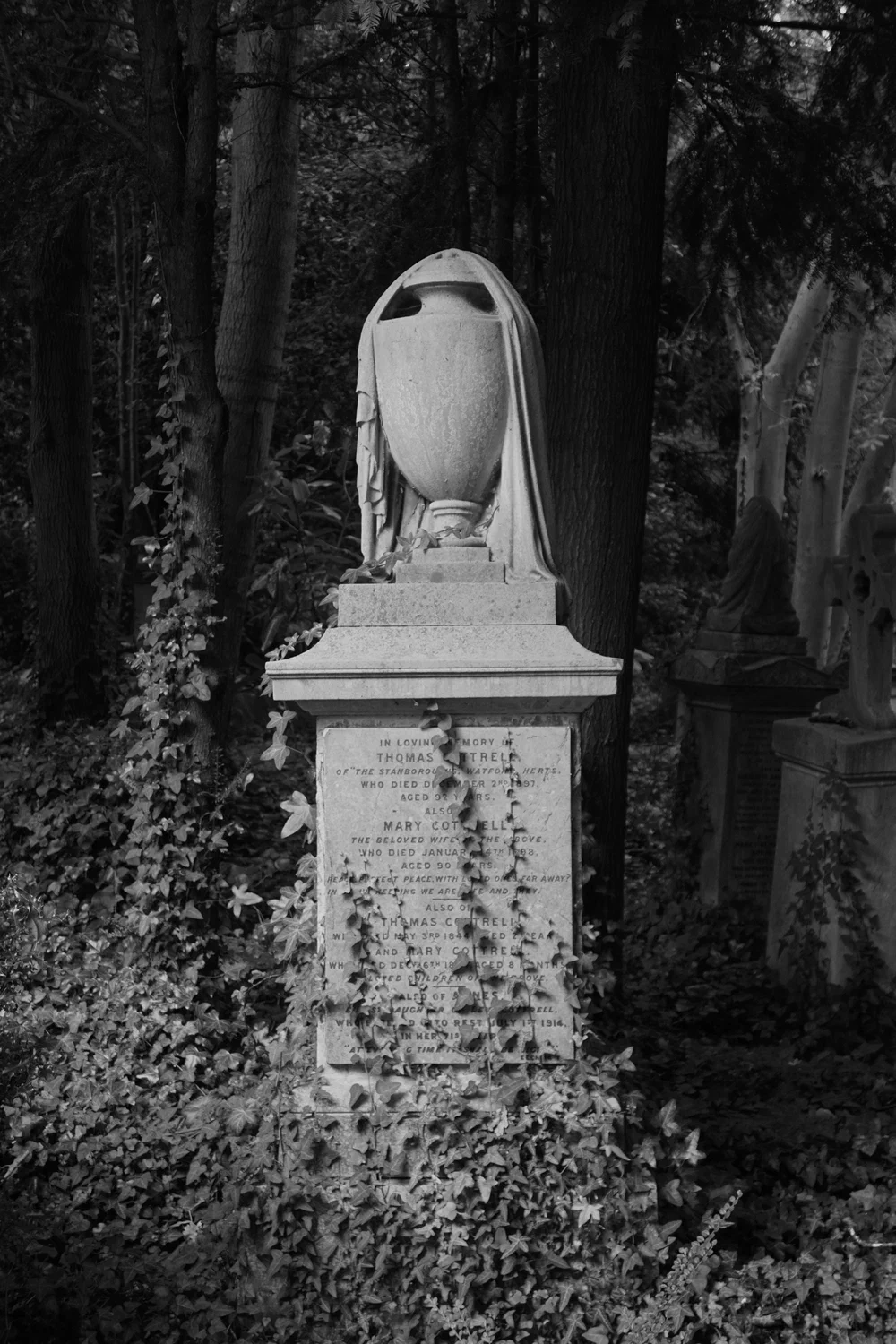
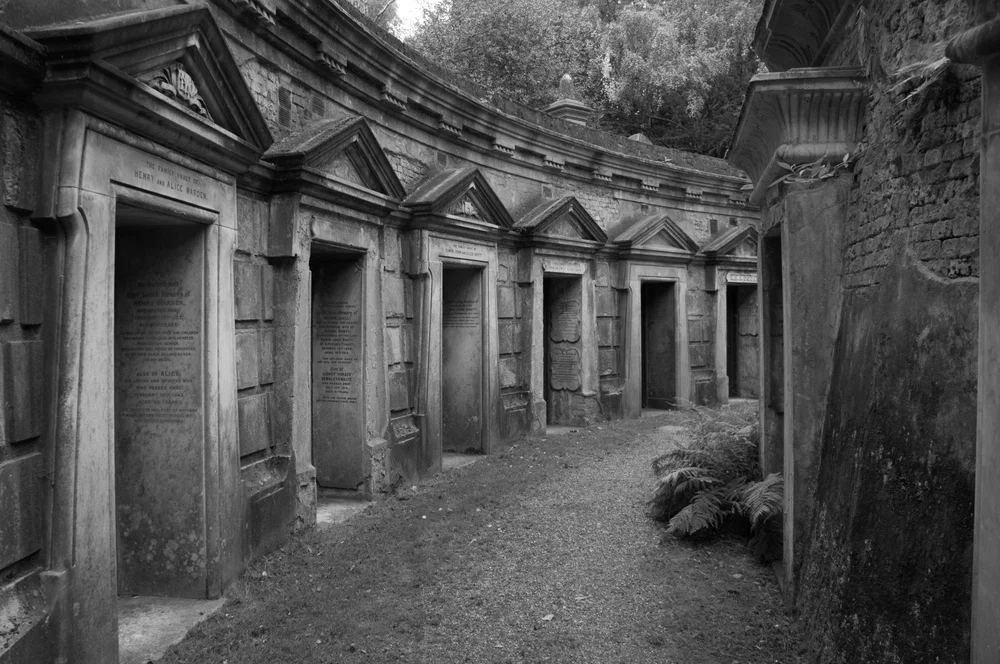
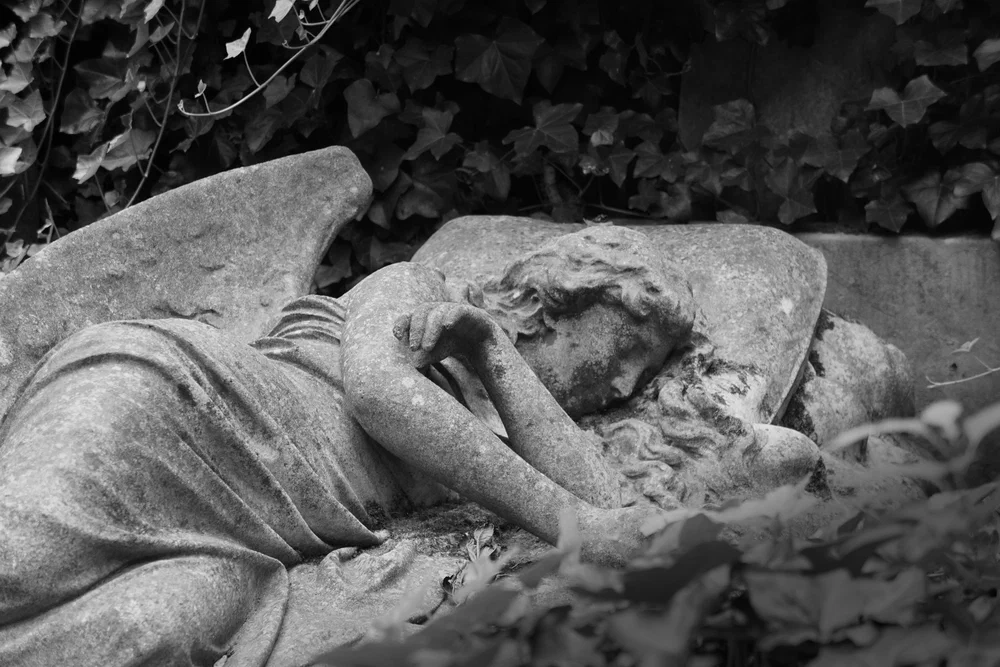
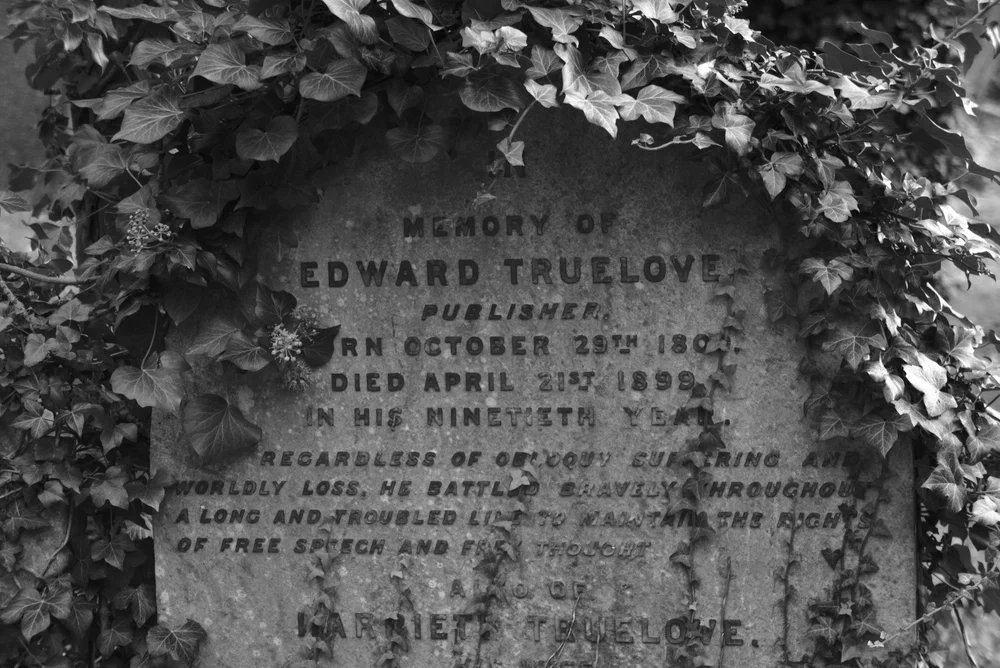
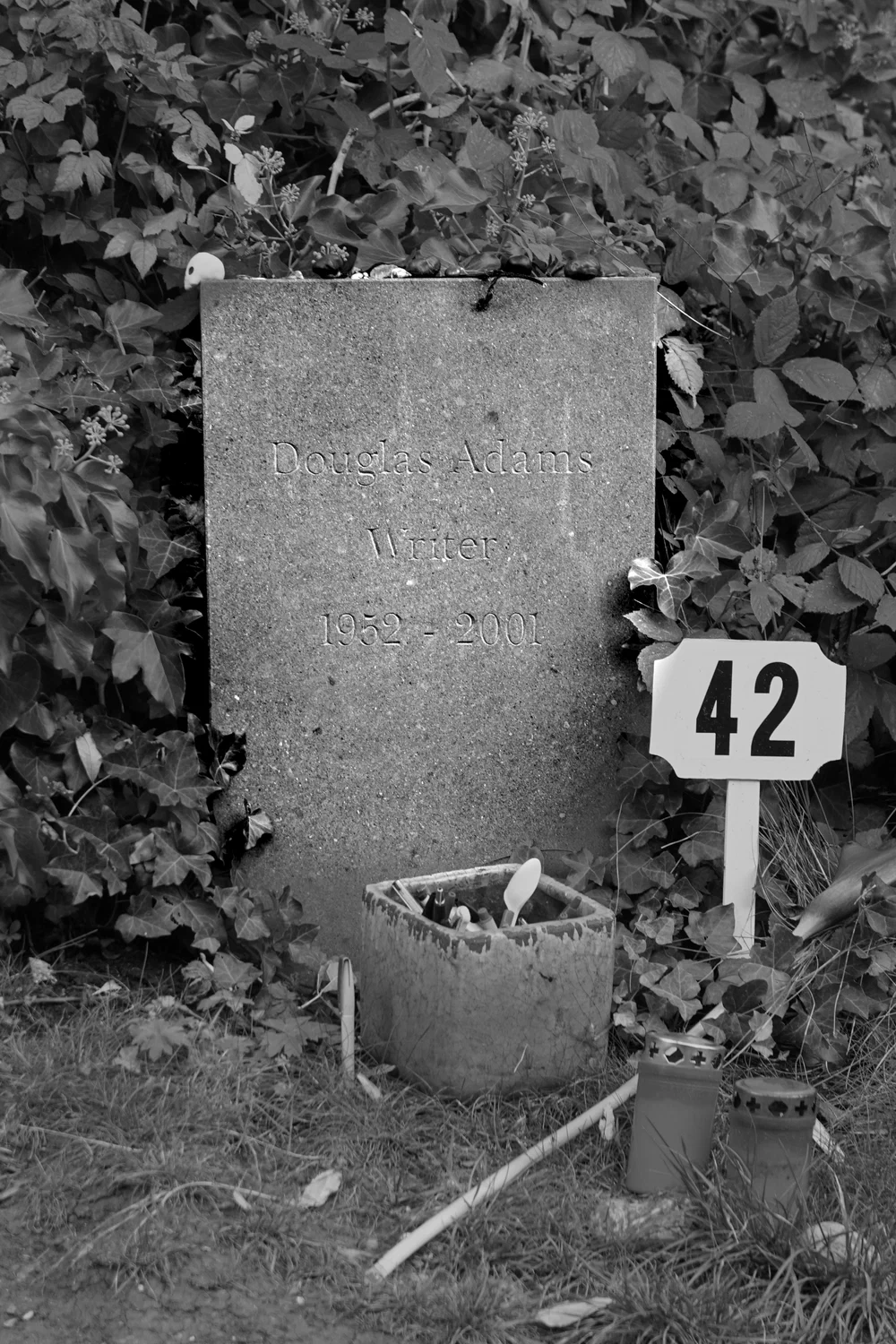
This is the story of five photographs from Highgate Cemetery.
I learned photography when I was fifteen. One day in ninth class, my physics teacher announced that instead of workshop classes, we would be having photography classes for the next six months. I cannot remember being terribly excited at the outset, but once I had developed my first roll of Ilford FP4, I was thoroughly hooked. So much so that I dug out the old photography lab my father had used decades earlier and set it up as my own.
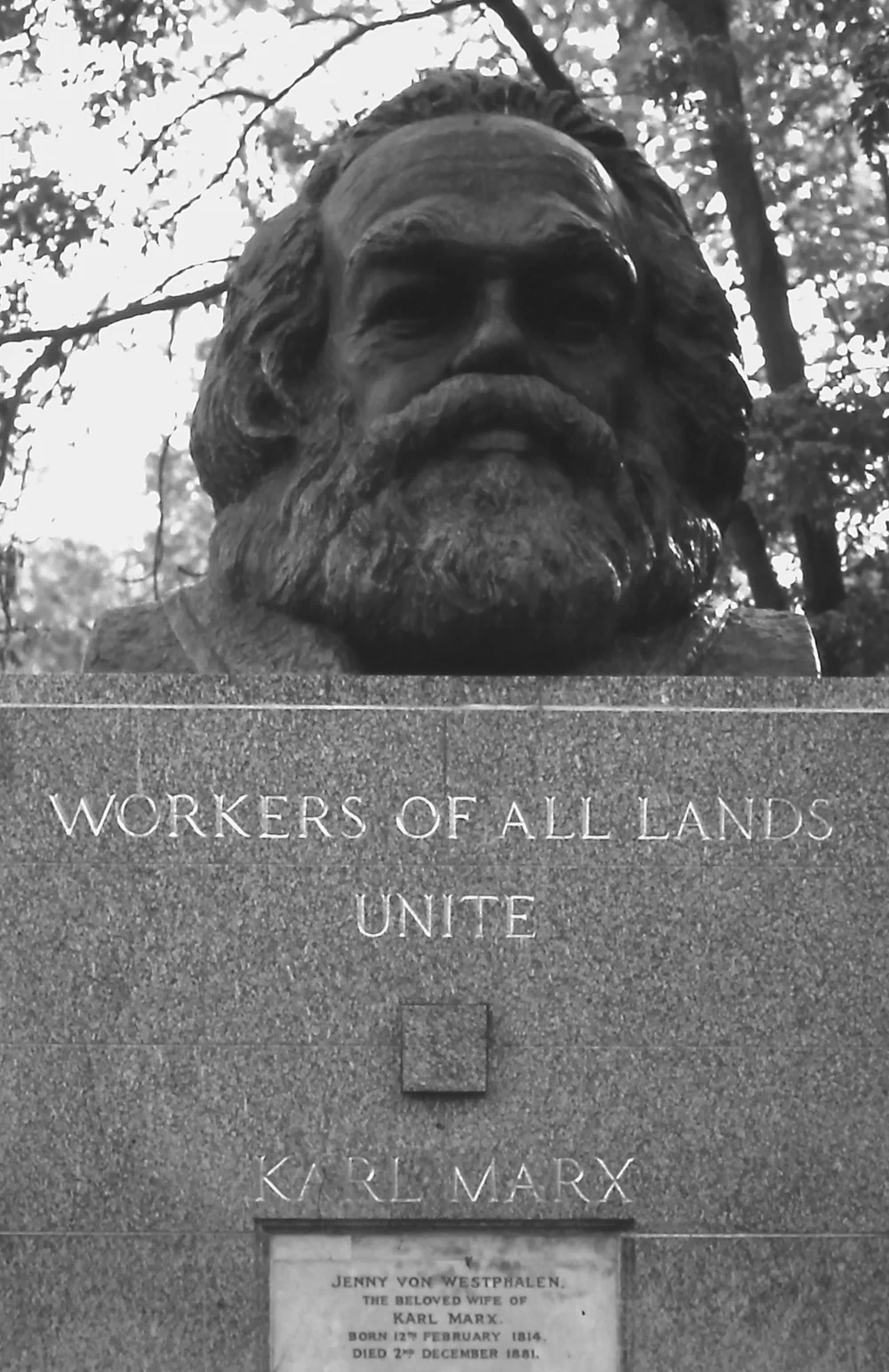
Years later, in 1994, I had exposed and developed more rolls of film than I cared to count. I was visiting a friend I had met on my travels at his home in London. As he lived near Highgate, I went to see Highgate Cemetery for the first time – and, of course, the grave of Karl Marx.
Highgate left a lasting impression. Since then, it has become one of the places I return to whenever I am in London for more than a few days. But this is about that first visit.
Of course I brought my camera: a Canon A-1, Canon’s top-of-the-range A-series 35 mm SLR, introduced in 1978 and loaded, as usual, with Ilford FP4. The model was already sixteen years old by then and showing its age. I still own the camera thirty-two years later, and if I decided to shoot 35 mm tomorrow, I would pick it up and use it without hesitation.
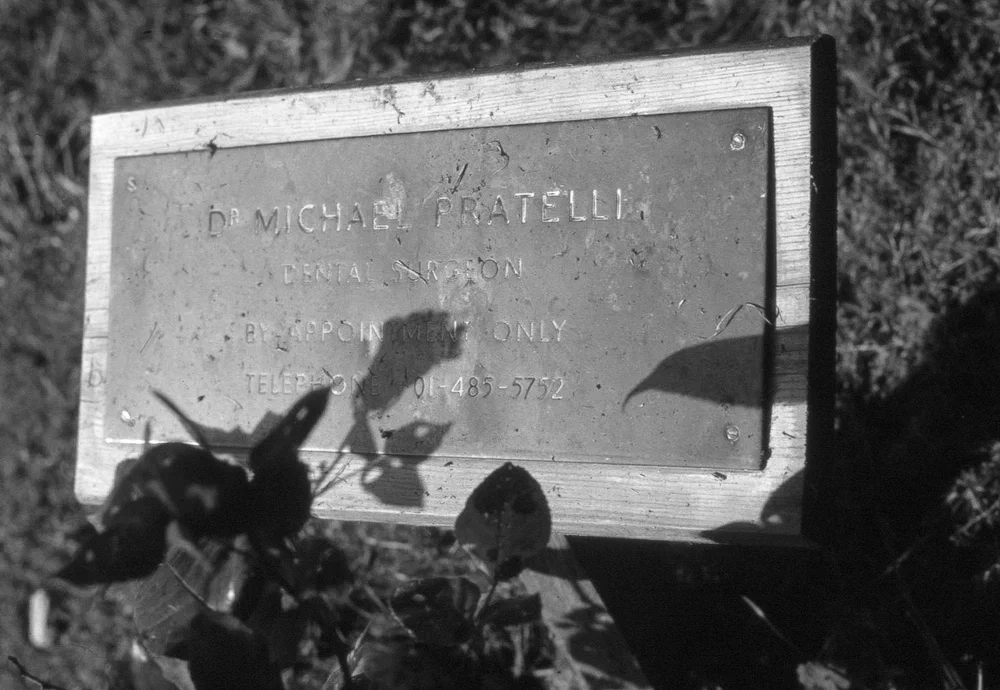
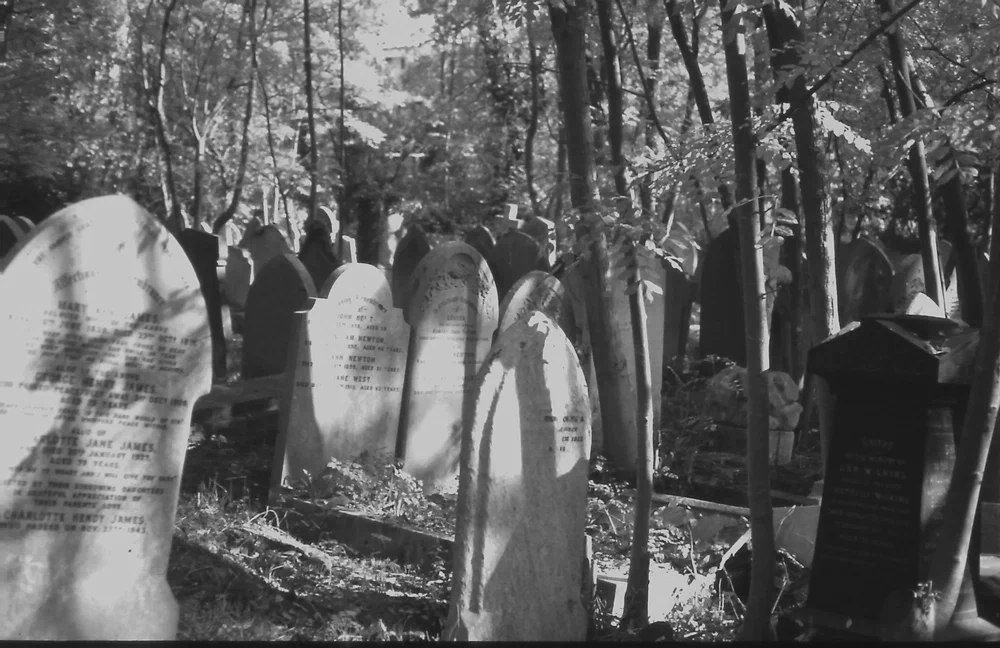
I came back from Highgate with five black-and-white photographs. I printed all five. By printed, I mean that I exposed sheets of light-sensitive paper beneath an enlarger, slid them into a tray of developer and watched the photographs slowly appear under the amber-green darkroom light while the room reeked of acetic acid.
There were five photographs. I no longer have the prints, and the scans from the negatives lack much of the definition and tonal depth I remember from the photographic paper I used at the time:
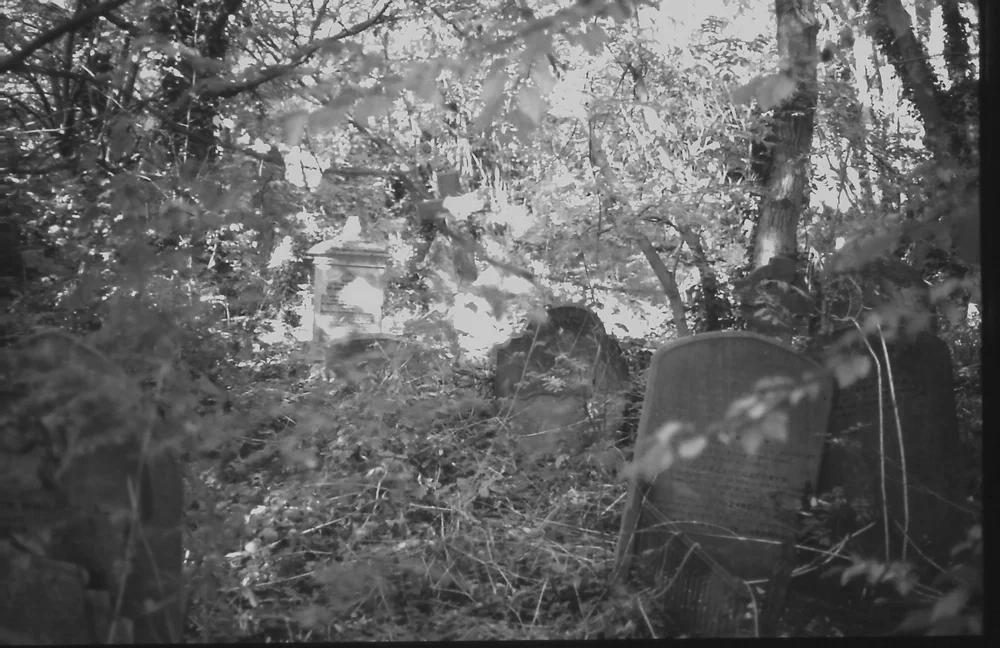
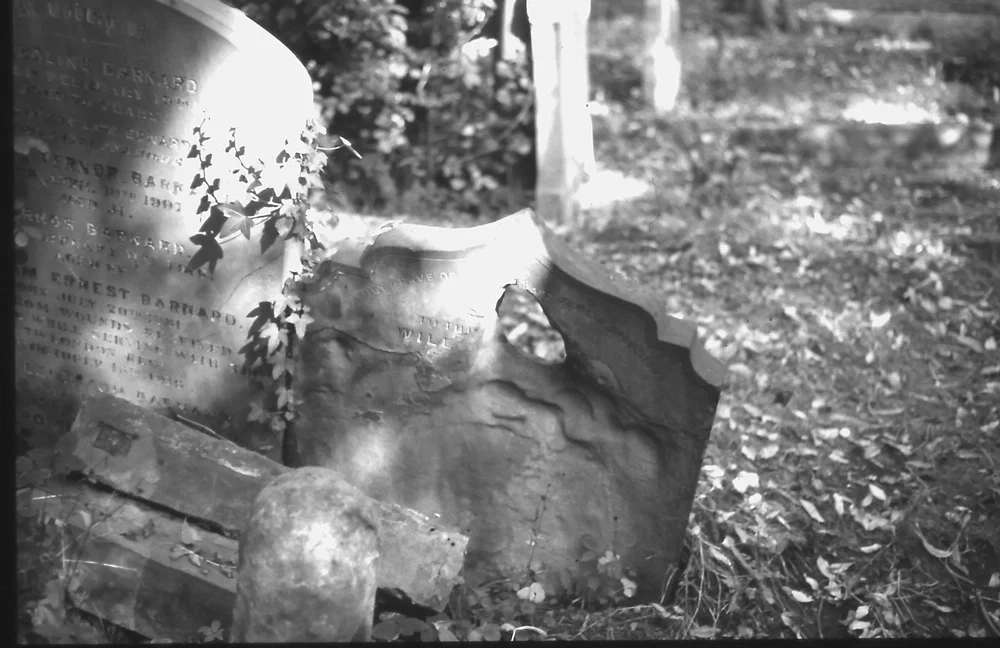
The Photograph Used to Arrive Later
Printing those photographs happened after I had returned from my trip. Whether I developed the black-and-white film myself or sent exposed colour-negative or slide film to a professional laboratory, days – sometimes weeks – could pass between pressing the shutter and seeing the photograph.
That delay, together with the cost of film and the hard limit of 36 exposures per roll, encouraged an economical approach to photography. Each exposure was deliberate. Often, I tried to imagine the final print while I was still looking through the viewfinder.
Sometimes, the photograph I finally held in my hand failed to measure up to what I had imagined.
Lies in the Dark

Some people have very nostalgic feelings towards traditionally printed photographs. I do as well; I like the handmade aspect. Much of the nostalgia surrounding old-school photography, however, centres on its supposed honesty. This is something I do not subscribe to.
The darkroom of old allowed – and indeed required – trickery of all sorts to produce the photograph one had in mind. Negatives could be retouched; prints could be cropped, reframed, softened, bleached, toned or assembled from several negatives. There were multiple exposures, composite prints and masking. And there was dodging and burning – techniques that survive under the same names as tools in Photoshop.
Dodging was usually performed with small cardboard masks attached to pieces of wire. The mask was wiggled above the paper during exposure, keeping selected areas from receiving too much light.
Burning did the opposite. After making the basic exposure, the printer used cupped hands to shield the surrounding paper while allowing additional light through a gap onto the area to be darkened. The hands were kept moving to soften the boundary and prevent a visible hard edge.
If you have ever wondered about the origin of Photoshop’s icons – yes, the Dodge tool is a piece of cardboard stuck to a wire, and the Burn tool is a hand. Not a hand being burned, but a hand doing the burning.
The Photograph Answers Back
Today, with very few people still bothering to load 35 mm film onto developing reels, feedback is instant. A digital camera will show you the photograph as soon as you have taken it – a mirrorless camera like my current one will show it to you before you take it. Even the viewfinder image is already an interpretation of the light falling on the sensor.
This creates a dialogue between the photograph and the photographer. Immediately after taking a photograph, I can check the framing, sharpness, motion blur and whether a particularly cheeky branch has invaded the frame somewhere. If something is wrong, I can simply take the picture again and keep doing so until I am happy with the result.
The first stage of selection can also happen immediately. If I do not like a photograph, I can delete it, or simply leave it on the memory card until later. Instead of 36 pictures on a roll, I have a memory card that can hold well over ten thousand photographs.
Most Photographs Never Arrive
In 1994, humanity took perhaps 67 billion photographs – roughly twelve per person per year, about one a month, or 180 million photographs per day. Current forecasts put the 2026 total at around 1.95 trillion – about 238 per person per year, almost twenty times as many, or 5.3 billion photographs per day. The world’s population has grown considerably in the meantime, but our production of photographs has grown considerably faster.
In 2017, during my last visit to Highgate, I took 600. Highgate had not increased in size by a factor of 120, and I did not spend 120 times as long there. But many subjects were photographed several times while I experimented with angles, played with depth of field or waited for a passing squirrel to end up in a photogenic spot (which they rarely did). Relatively few survived the later selection phase, and fewer still were actually printed – this time on an inkjet printer rather than in a tray of developer.
This mirrors the global trend. The number of photographs we take has risen enormously, accelerating first with consumer digital cameras and then sharply again when mobile phones began to include cameras. Printing services have not disappeared, but printing is no longer the normal final stage of photography.
The infrastructure that once carried photographs from exposure to physical object has contracted as well. Dwayne’s Photo in Parsons, Kansas, was the last laboratory in the world able to process Kodachrome in colour using Kodak’s K-14 process. It accepted its final rolls in December 2010 and finished processing the remaining backlog in January 2011.
Most photographs nowadays live on screens. Many never leave storage at all.
Five Photographs
Most. But not all.
Of the 600 photographs I took at Highgate Cemetery in 2017, five made it onto paper. All were framed; some were hung on my own walls and others were given away as presents. The final number of printed photographs had remained nicely consistent over thirty-two years.
The process of choosing them, however, had been reversed. In 1994, I decided which five photographs were worth taking. In 2017, I decided which five of six hundred were worth printing.
The scarcity had not disappeared. It had merely moved from the shutter to the printer.
Five photographs arrived.