Chernobyl 2018
A two-day private tour of the Chernobyl Exclusion Zone in September 2018, including a visit inside the ChNPP power plant itself, the control rooms, Pripyat and a stopover at Tunya’s village.
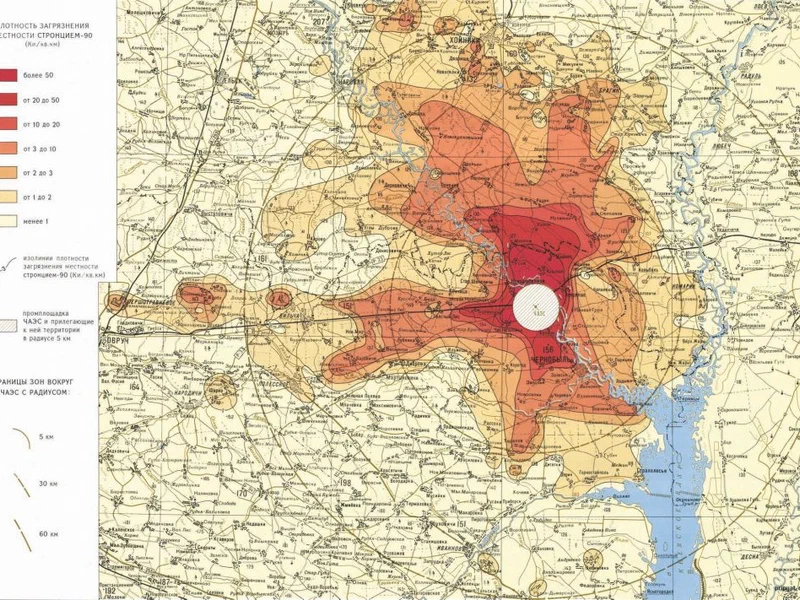
Чорнобиль 2018
…if you’ve read last years story of my trip to the Chernobyl nuclear exclusion zone, you’ll probably remember me saying that “the Zone was calling me” and that I’d be back. I didn’t quite expect to be back that quickly though.
So, what happened? If you know me, you know that I talk about the trip quite a lot – some people might even say I hardly ever shut up about it. One of my friends, Alan, was fascinated by my story and, when I saw him again a couple of weeks later, he told me that he had caught the bug properly and wanted to go experience the Zone for himself. I thought “Hey, why not?” and offered to go along and organise the trip. Alan managed to drum up a couple of his friends to join us, so a private tour became a possibility – and while we were at it, we decided to go for a two day tour instead of only the one day. We chose SoloEast as our tour operator – I was very impressed with them last year.
I also wanted to offer my co-travellers and myself something special, so I enquired whether there was a possibility to visit the actual power plant, instead of just seeing it from the outside.
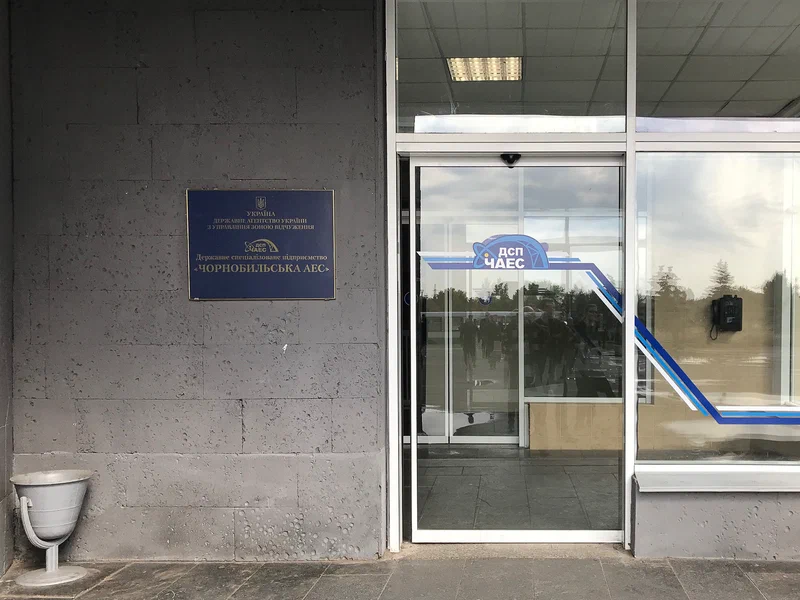
ДСП ЧАЕС
Before the accident in 1986, the power plant was called «Чернобыльская АЭС им. В.И.Ленина», the “V.I.Lenin Nuclear Power Station Chernobyl”. Lenin’s name was rarely mentioned after 1986 and completely dropped after the breakup of the Soviet Union, nowadays it’s the Державне спеціалізоване підприємство «Чорнобильська АЕС», State Specialized Enterprise «Chornobyl NPP». In official parlance, most people seem to use the acronym ЧАЕС - roughly pronounced “Tcha-Ess”. You’ll see two varieties of the spelling in the photos: «ЧАЕС» and «ЧАЭС», which are the Ukrainian and the Russian spellings respectively.
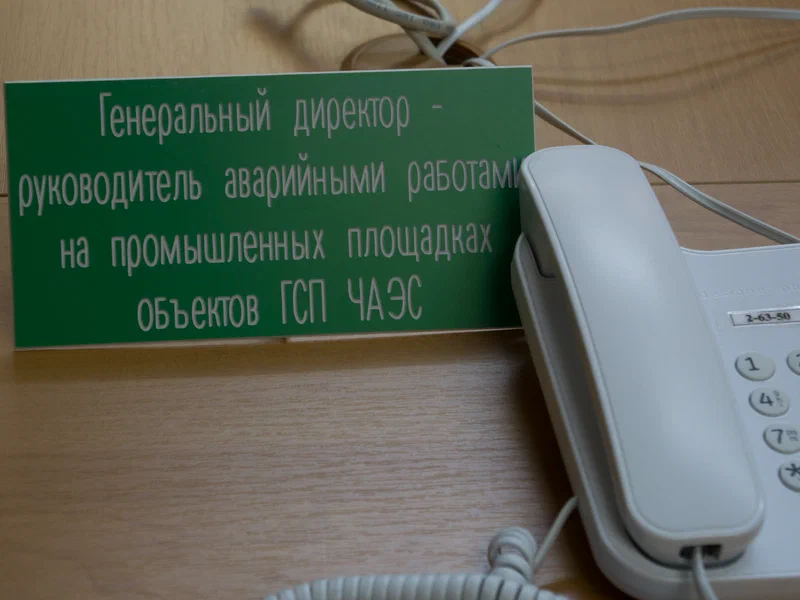
We entered the Zone on September 11th, 2018 and drove straight here without stopping at any of the places familiar to me from the last trip. I took this photo surreptitiously with my phone, as we were strictly instructed not to even think about pointing any cameras in the direction of the power plant on the last trip. I could just as well have set up a tripod, some studio lighting and a make up artist for the sign. taking pictures of the station is apparently allowed now. Not only that, we did get to enter the door…
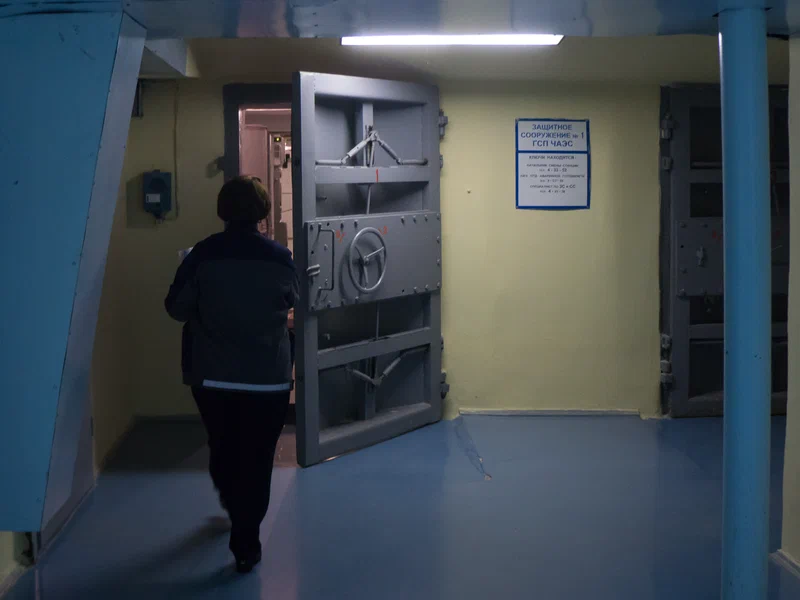
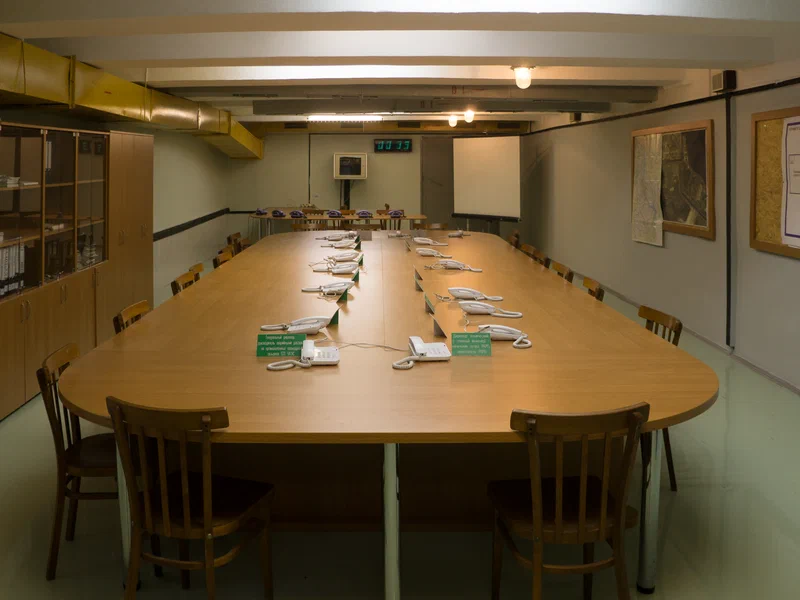
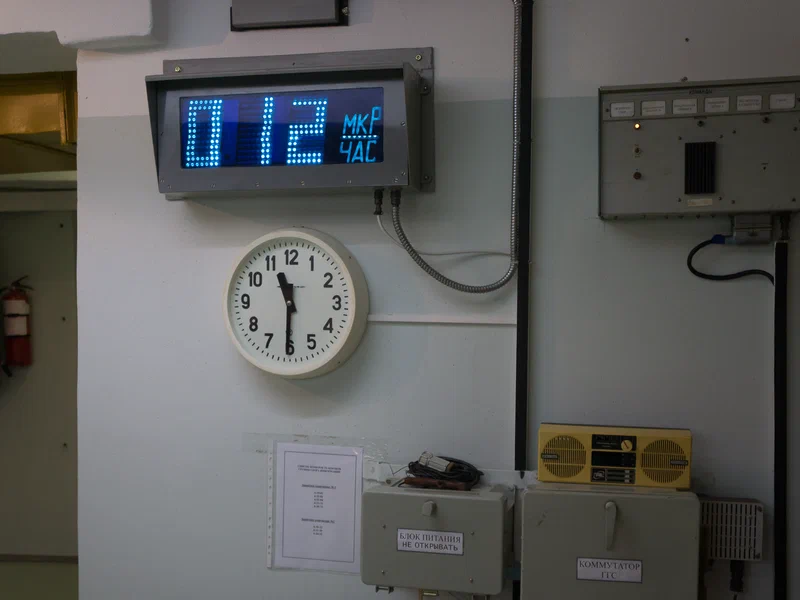
The display on the wall shows current outside radiation levels in microRoentgen per hour. The current reading of 12 μR/h is equivalent to 0.12 microSievert per hour, which is less than the standard background radiation in Kiev (around 0.2 μSv/h), due to the abundance of marble and granite in Kiev. This corresponds to a BED (Banana-equivalent dose, the dose one is exposed to by eating one average-sized banana) of just over one banana per hour.
If you think I made that last bit up – I didn’t.
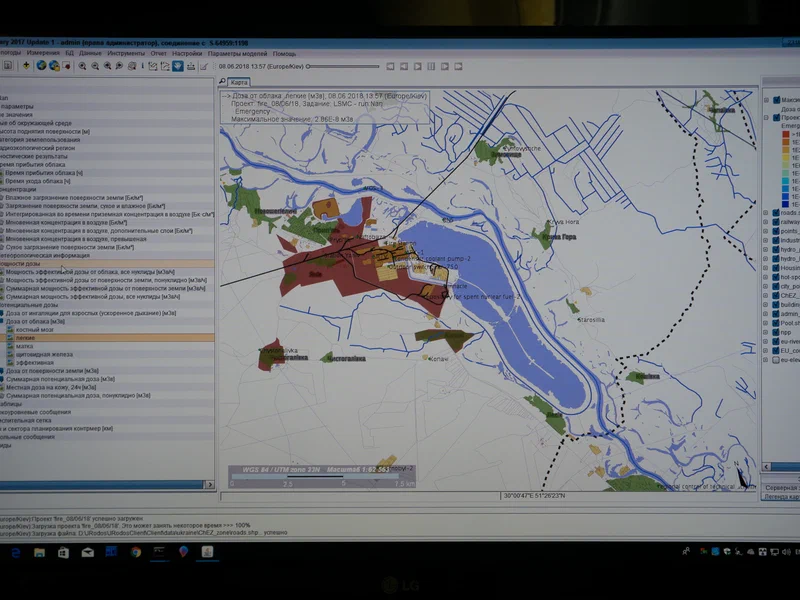
There are, of course, also more modern means of keeping tabs on the situation outside. This screen does show an awful lot of red – which, as in most cases, means “emergency” – but I found out that at the time I took the photo, the screen displayed historical data from June 8th 2018, three days after a forest fire broke out in the area.
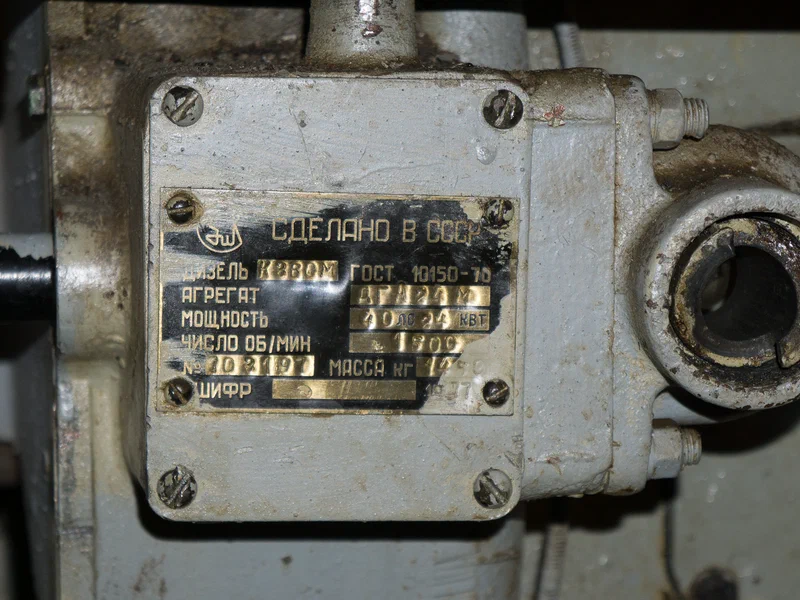
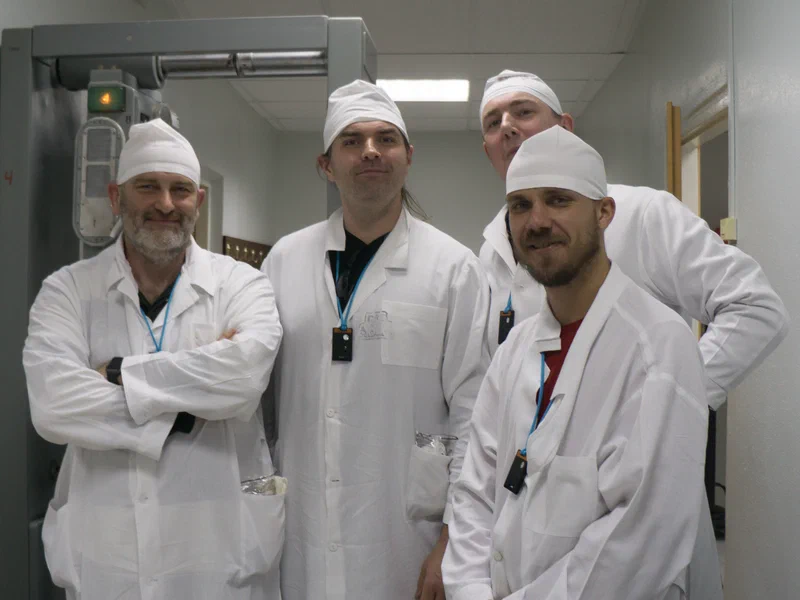
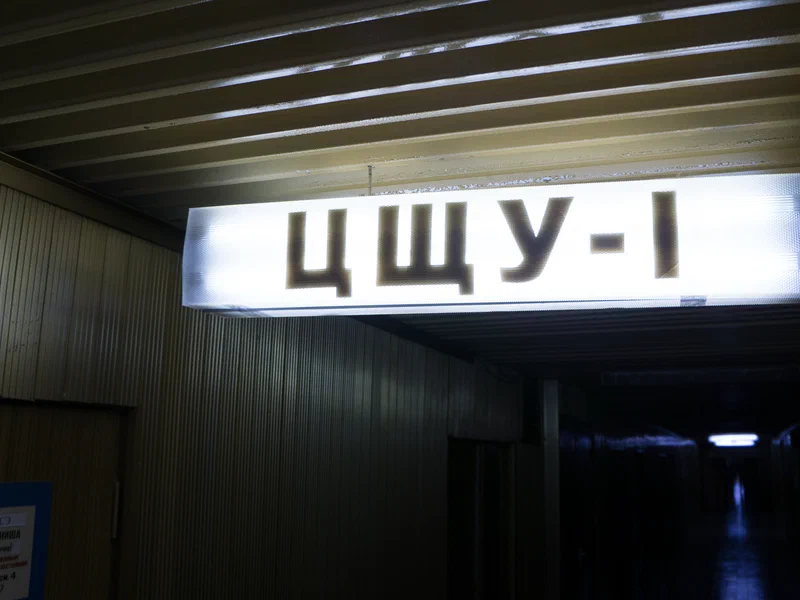
ЦЩУ-1
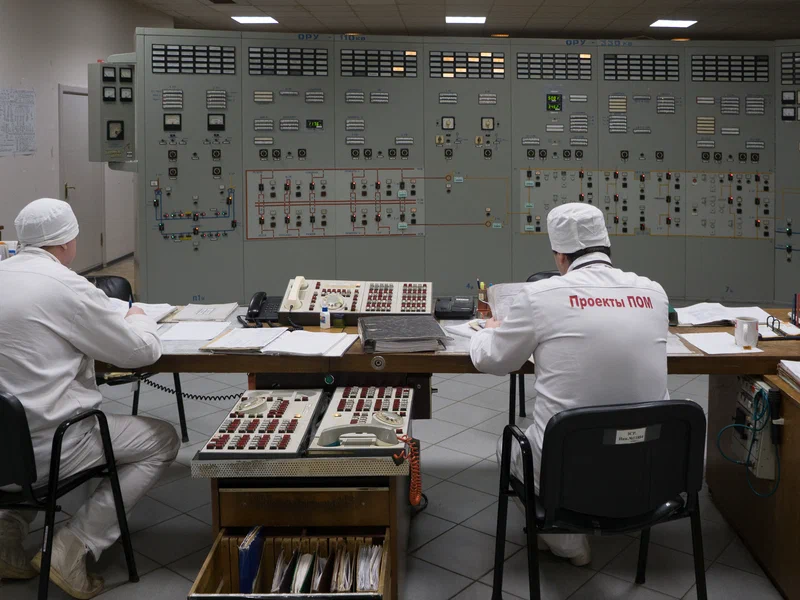
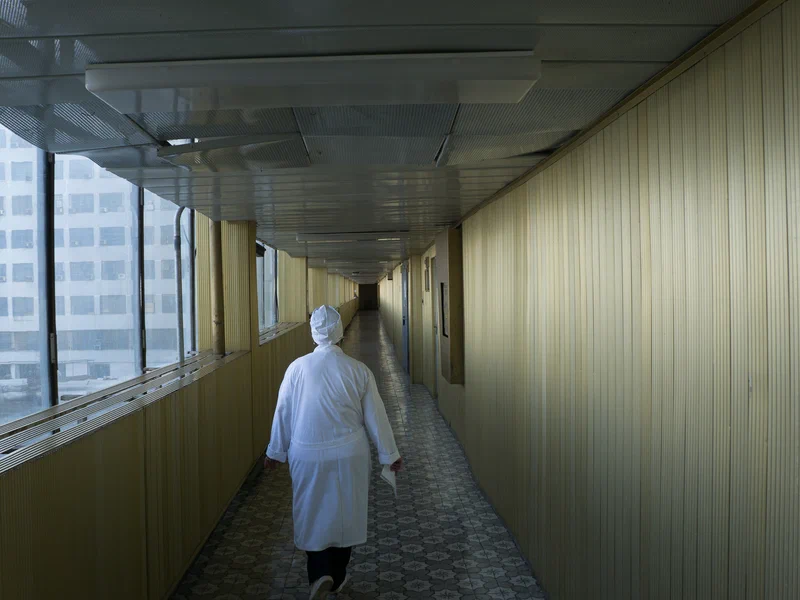
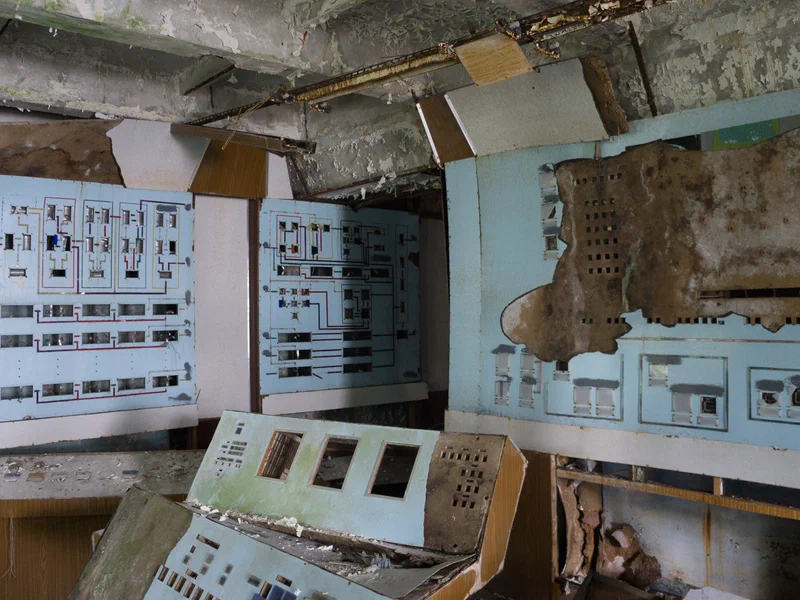
The «Центральный Щит Управления» (Central Control Panel) Number 1 – as with most active parts of the plant, we had our visit announced and cleared before we could enter here. I noticed that several doors off the «golden corridor» are locked and sealed with what look like police evidence paper seals – evidence that the plant has shut down.
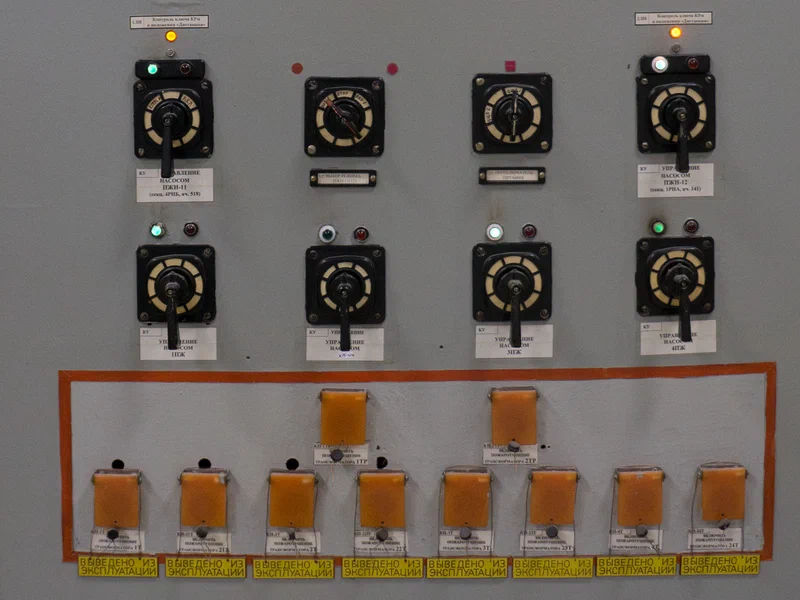
выведено из эксплуатации
On closer inspection, some of the impressive looking switches – like some on this pump control panel – have plaques that read «выведено из эксплуатации» – Decommissioned.
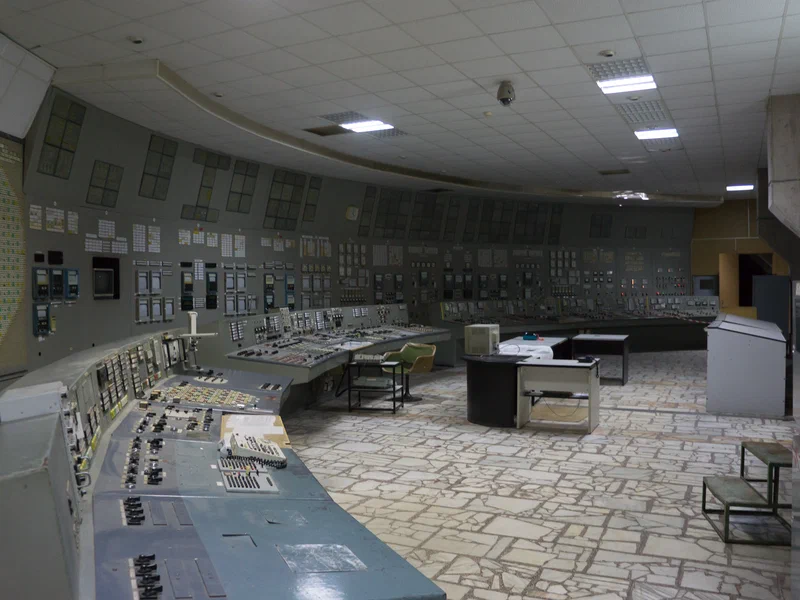
Блочный Щит Управления 3
БЩУ 3, Reactor Control 3, was our next stop. This is more or less identical to control room 4, but the latter has been stripped of most of its instruments, either as spares or souvenirs, over the years. This control room was active until 2000, you can see the switching off of the reactor here – a sad moment for all involved:
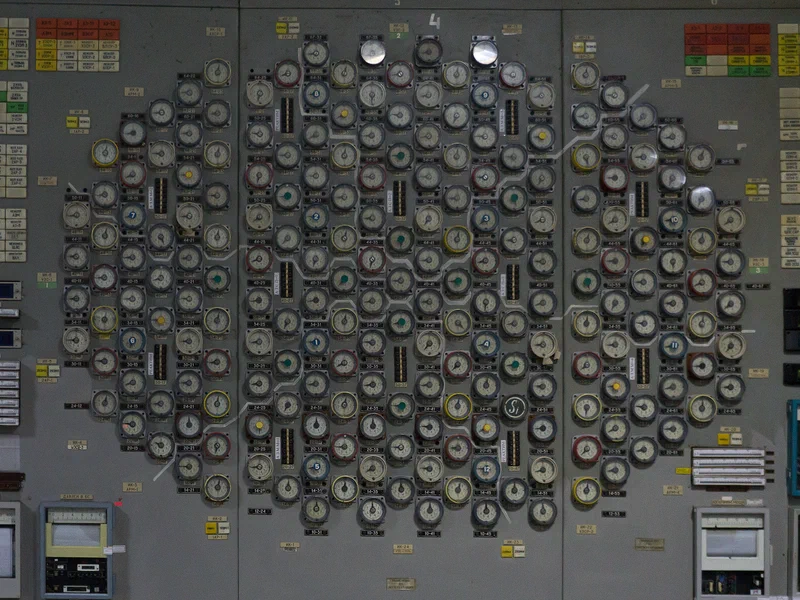
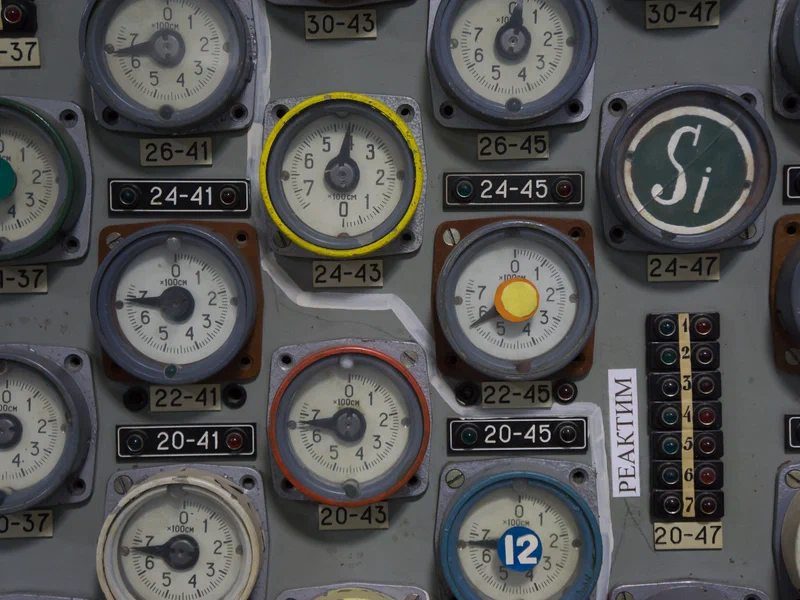
Control rod number 24-47 is different – instead of the servo indicator, it just shows a hand painted sign labelled «Si». I saw this, read up on it later and found out that not only was ChNPP a nuclear power station, its reactors were also used for neutron transmutation of silicon. This process takes place when undoped (high purity) silicon is irradiated in a thermal neutron flux – like, oh, for example in a nuclear reactor. This turns the silicon atoms that collide with the neutrons into phosphorus, creating doped silicon for use in high power electronic semiconductors. A 1984 paper «Properties of Silcon Doped in the RBMK-1000 Reactor of Chernobyl’sk Atomic Energy Power Plant» by V.M. Volle, V.B. Voronkov et al. shows that the process «[…]makes it possible to obtain a high number of large ingots [of silicon with improved parameters and increased breakdown voltages] without detriment to energy production.»
This starts to make even more sense if you consider that the “Jupiter”-factory on the outskirts of Pripyat didn’t manufacture cassette tape recorders (according to the official designation), but rather semiconductor components for the Soviet military.
One thing I only noticed when I looked at this picture later is that all the instruments are only held in by one screw each. I take this as another indicator that the plant is slowly being dismantled.
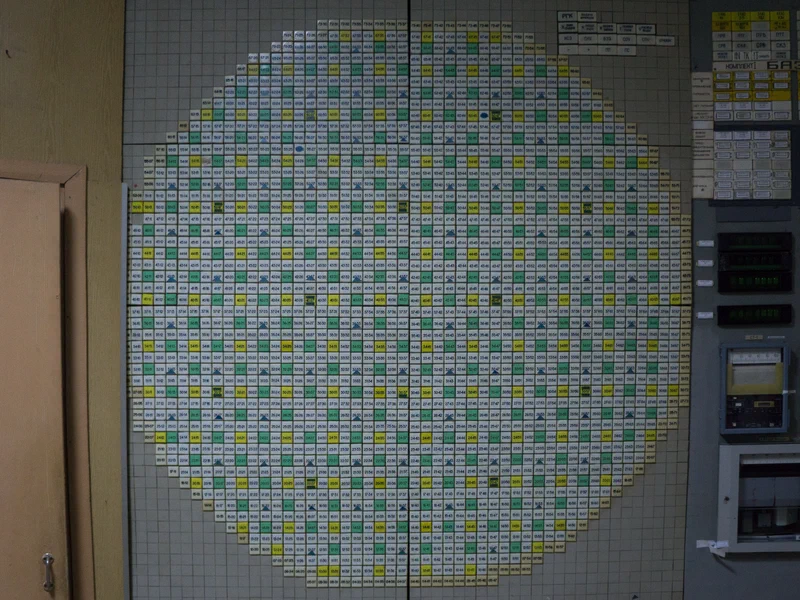
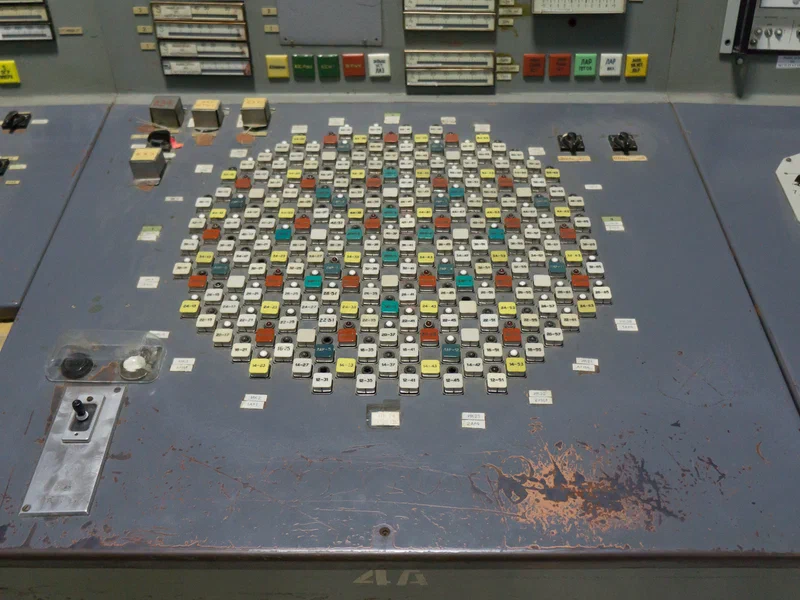
Next to the control rod servo indicators is the core channel cartogram display of the reactor. This shows all the elements of the reactor: Green lights for control rod channels, white for fuel channels and yellow for fuel channels with power density probes.
The display can map various functions controlled by the «SKALA» process control computer, which was – in my opinion – quite an advanced piece of hardware for its time. It dates back to the 1960s; the machine uses magnetic core memory, magnetic tape data storage, and even punched tape, yet at the same time the software was already developed based on the concept of virtual machines.
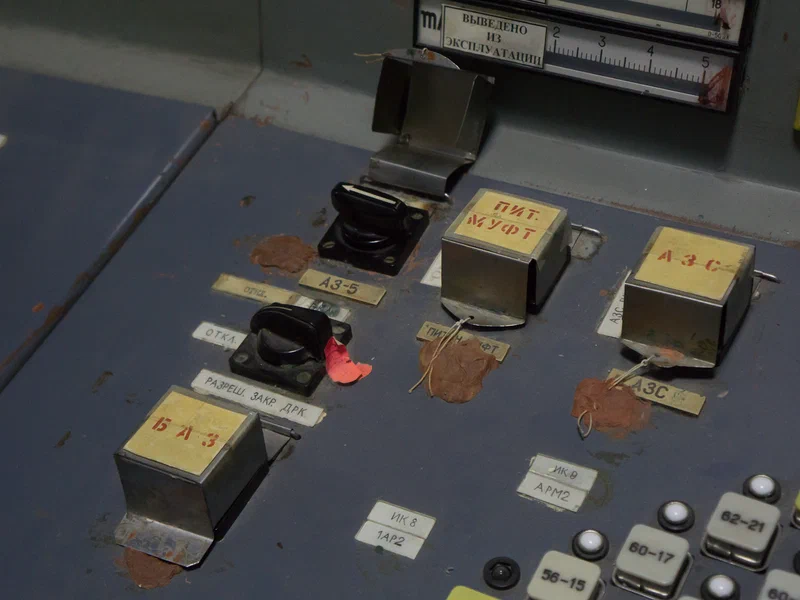
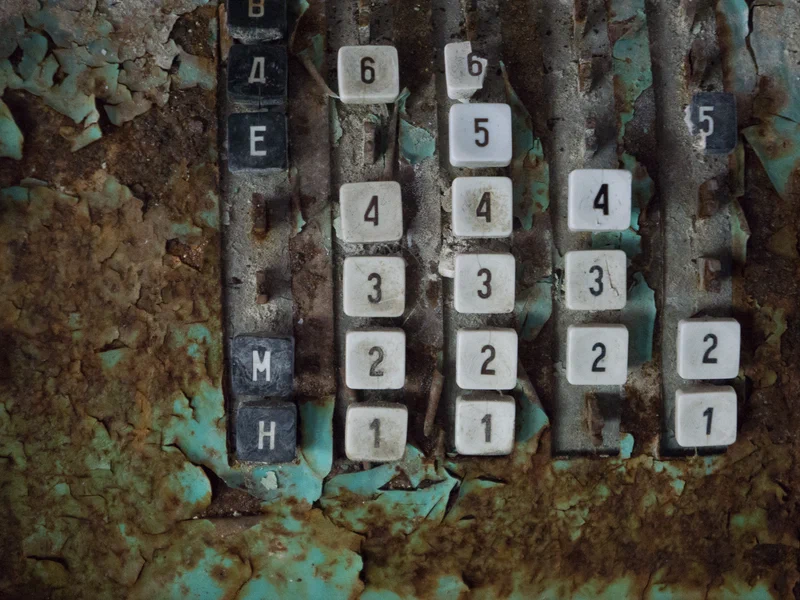
…shown closer here. The uncovered switch is АЗ-5 (Short for «Аварийная защита ядерного реактора № 5», Emergency Reactor Shutdown, fifth stage). If you watched the video a couple of pages ago, this is the exact switch that was used to turn off reactor three in 2000. The corresponding switch (or in that case: button) in control room four is what – according to most sources – ultimately triggered the explosion. Here’s the relevant excerpt from DTIC ADA335076: JPRS Report, Soviet Union: Economic Affairs (“Chernobyl Notebook” By G. Medvedev, Published in Novy Mir, June 1989)
Let us explain once again for the general reader: When the emergency safety system (AZ) is activated, all 211 control rods fall downward, cooling water shoots in, emergency pumps are turned on, and the diesel generators providing reliable electric power are started up. Emergency pumps supplying water from the clean condensate tanks and pumps supplying water from the bubbler pond to the reactor are also activated. That is, the safety systems are more than adequate if they are activated at the right time.
Medvedev then writes in “The Truth About Chernobyl”:
At 1:23:40, [Akimov] pressed the level-5 emergency power reduction button, sending a signal that lowered into the reactor core all the control rods then in the fully withdrawn position, as well as the emergency protection rods themselves. However, the first thing to enter the core was those fateful rod tips, which, as we have seen, caused a 0.5 fi increase in reactivity. And they entered the reactor at the precise moment when a sharp jump in reactivity was being caused by the extensive steam formation which had already begun. The increase in core temperature produced the same effect. So three factors inimical to the reactor core all came together at the same time.
The reactivity of the reactor is show on the gauge above AZ-5, now only showing a sticker saying “decommissioned”.
The Door
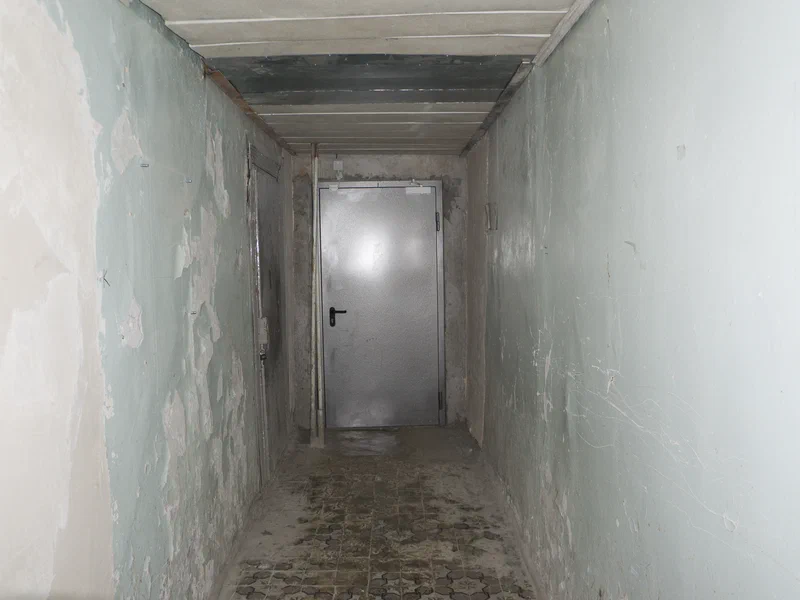
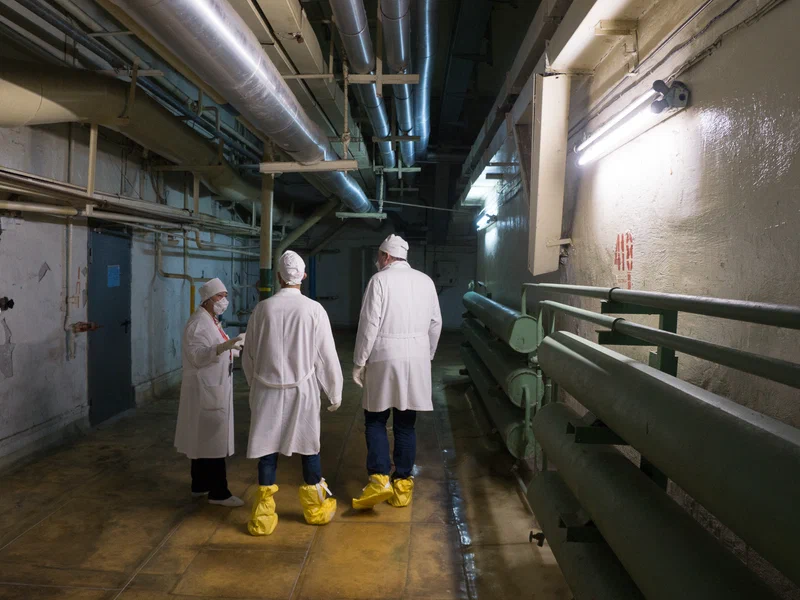
Towards the end of the corridor, the walls started to turn more derelict, culminating in bare concrete and a plain metal door at the end. This is the one door we didn’t want to go through without more effective radiation protection gear – right behind it is reactor block number four.
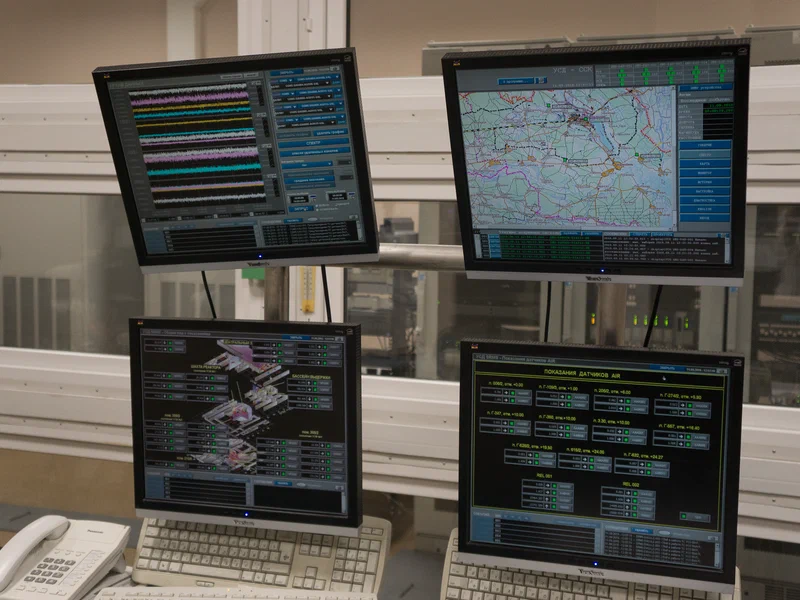
One of the last stops in the power plant was the New Safe Containment surveillance and monitoring station run by the “Institute for Safety Problems of Nuclear Power Plants of the National Academy of Sciences of Ukraine”.
These screens show the measurements and the locations of various probes inserted into reactor 4, measuring temperature, alpha-, beta- and gamma-radiation as well as “Neutron Flux”, which was mentioned in the same tone that one normally mentions rain outside. If that in itself wasn’t weird enough, the fact that the sensor status “green” means “still enough radiation to kill you in a short time” definitely was.
Yuliya told us at the beginning of the trip that photography of monitoring systems wasn’t allowed, but I honestly forgot about it and nobody even batted an eyelid, so I don’t feel too bad about my transgression.
The Icon
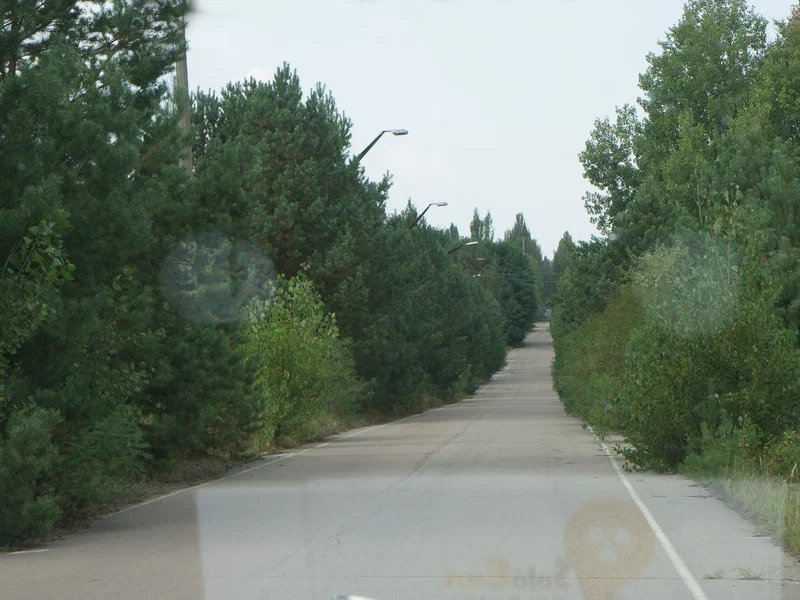
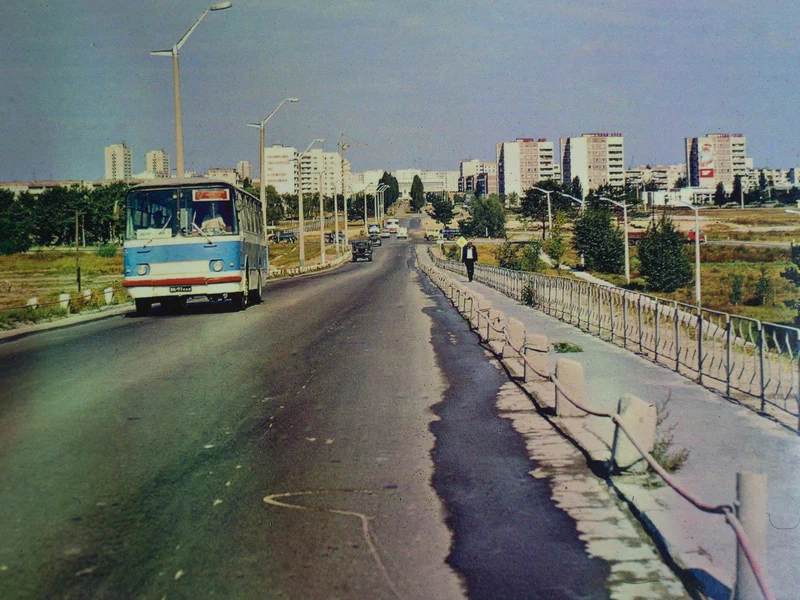
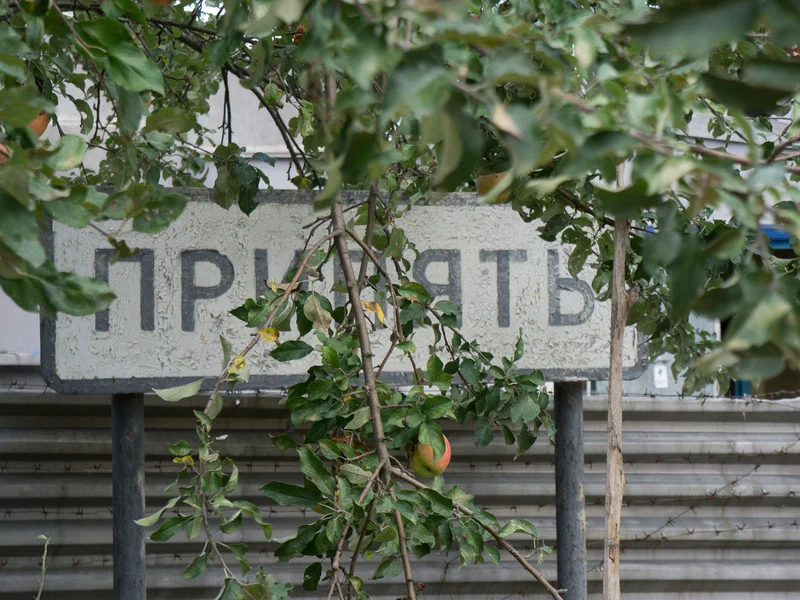
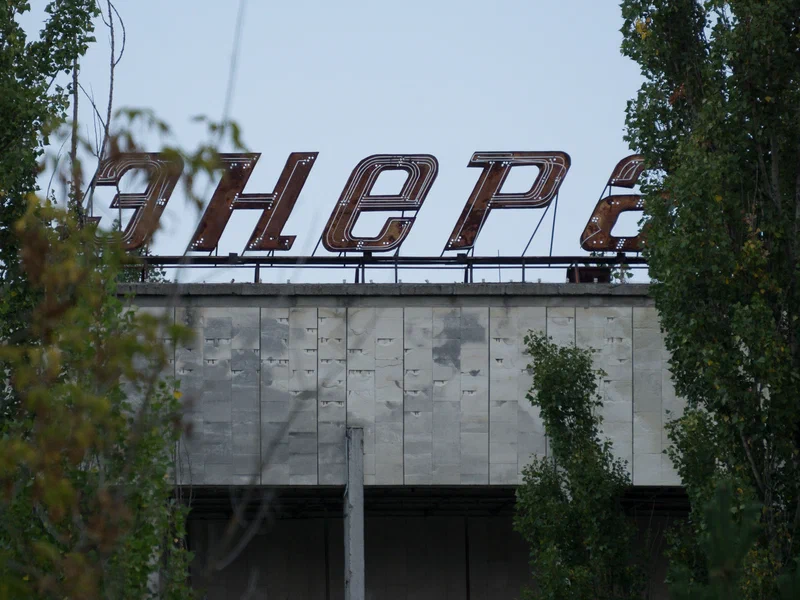
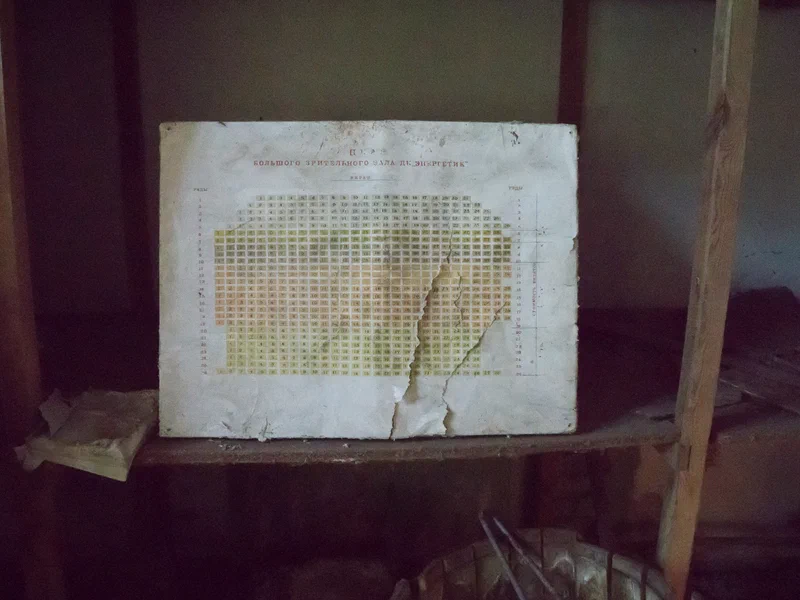
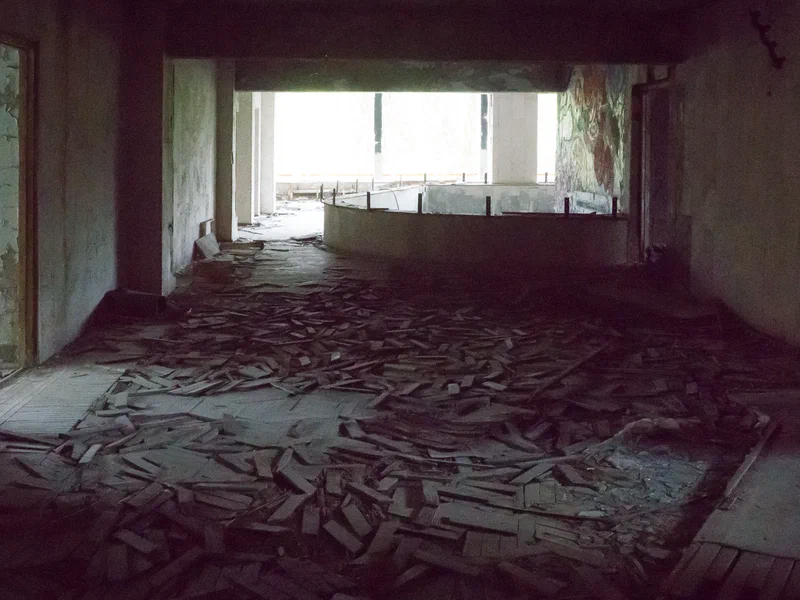
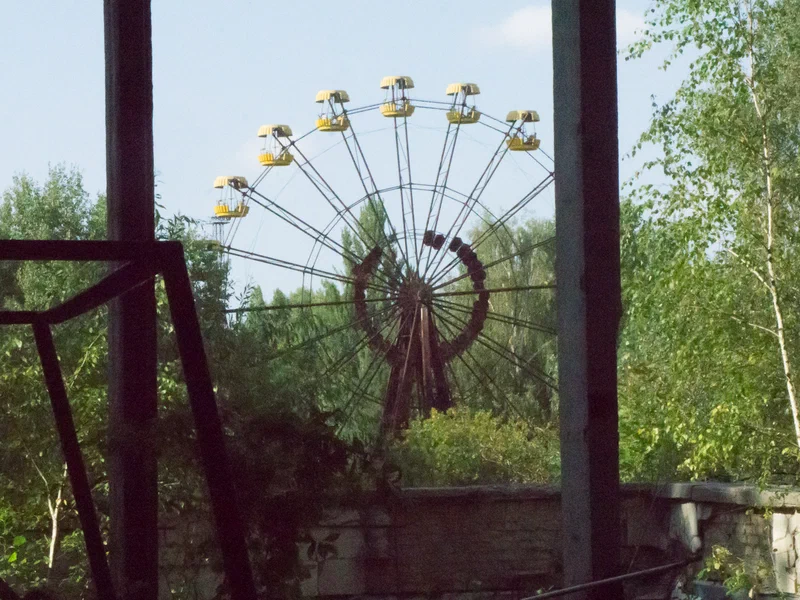
The usual tour to Pripyat stops at the fairground to see the now iconic ferris wheel. We did as well, of course, but our first sight of it was from a corridor in the cultural palace. Upon processing my photos, I found out that I had inadvertently set my camera to use 25600 ISO, so a load of pictures from around that time are grainy to the point of being unsuitable for public consumption. The few pictures from that series that I liked enough, I post-processed extensively to get them to look at least halfway decent. This is one of them.
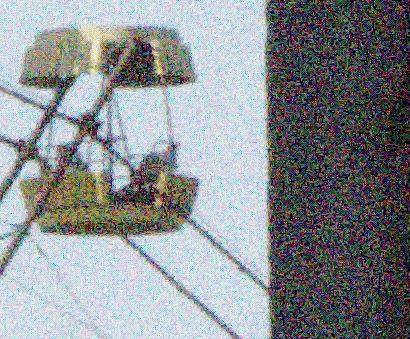
This is what I had to work with… That will teach me to check the settings every single time I press the shutter button.
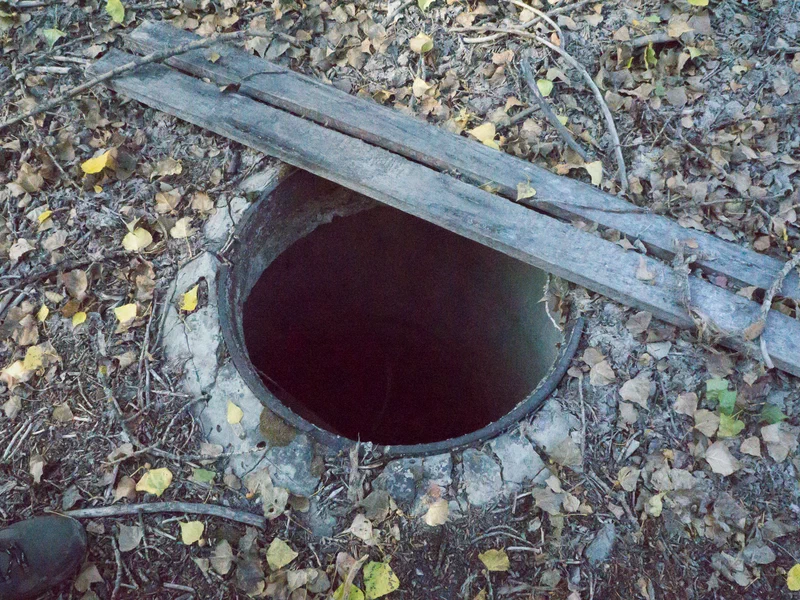
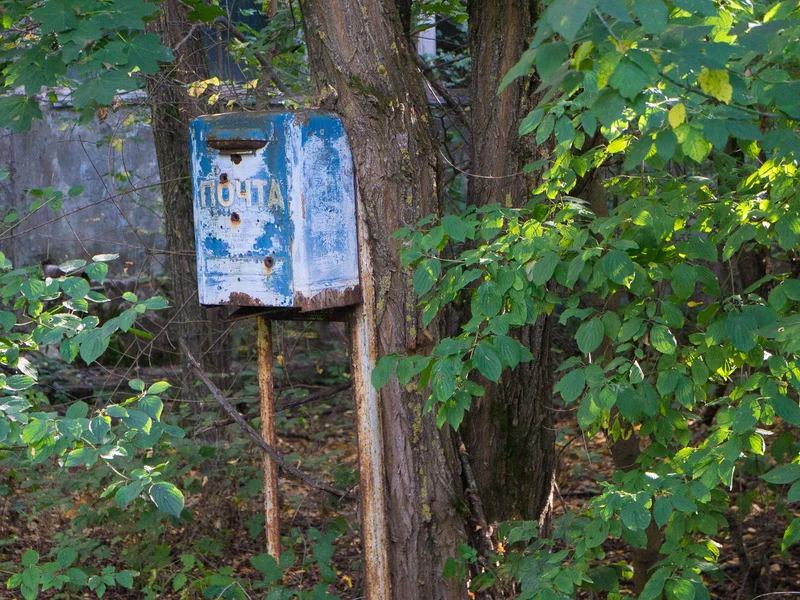
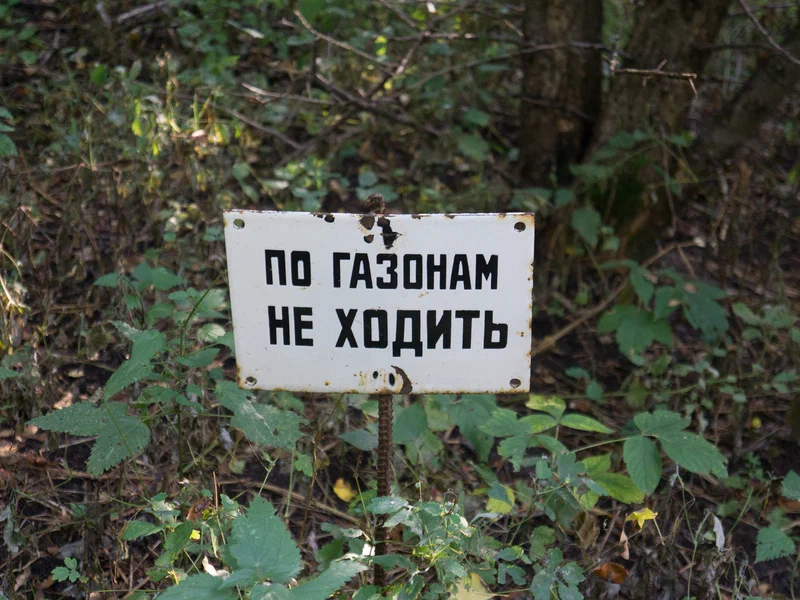
Do not walk on the lawn
Even if we had wanted to, we couldn’t. First of all, the border between lawn and not-lawn was no longer visible, and where I assumed the lawn to have been previously, brambles and other bushes made the terrain pretty much impassable. We would have another problem wallking on something, but more of that later.
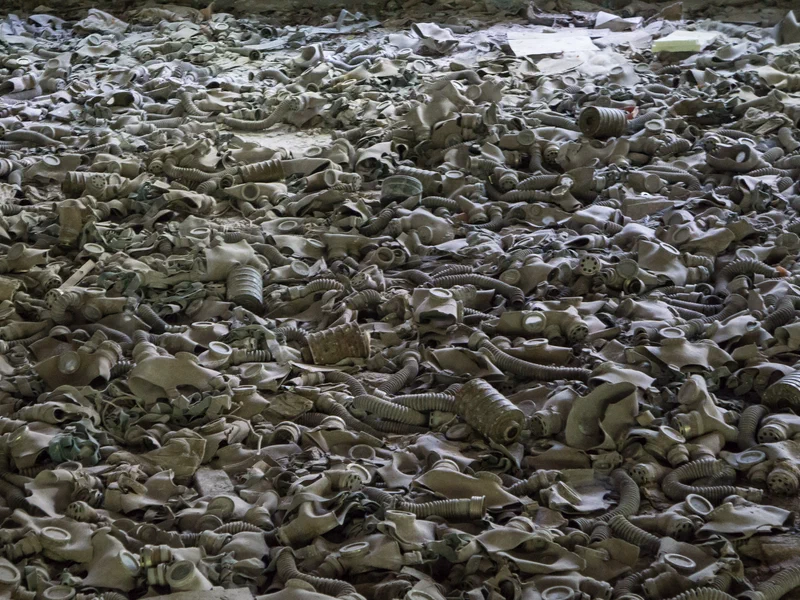
The Gas Masks
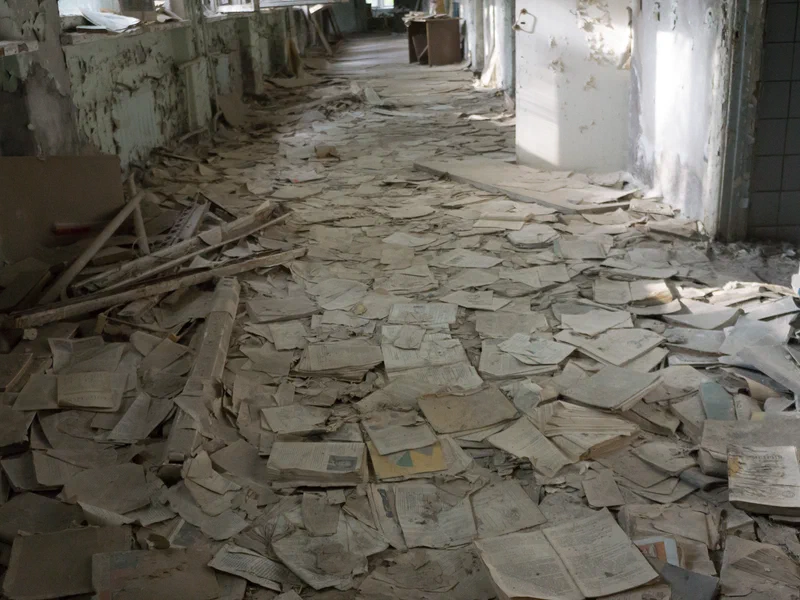
This is a picture a lot of people bring home from Chernobyl, and many use it to generate shock. “Look at all the gas masks! In a school!” - well, there are several stories of why they’re there – most are wrong.
They were used to protect the kids from the effects of the accident. No. If they were, what would explain that they don’t have their filters attached and are lying all in the same room?
They were never used, but stored in the basement in case of an American nuclear attack. That one, as far as I can tell, holds water.
Looters removed them from the basement to get at the silver/activated charcoal/some other material in their filters. That doesn’t explain why the filters are still lying there as well.
The explanation Igor gave us was that the gas masks were packed in heavy duty wooden crates, which were simply emptied on the floot and then used to transport other stuff out of the zone. That, at least, seem to make sense.
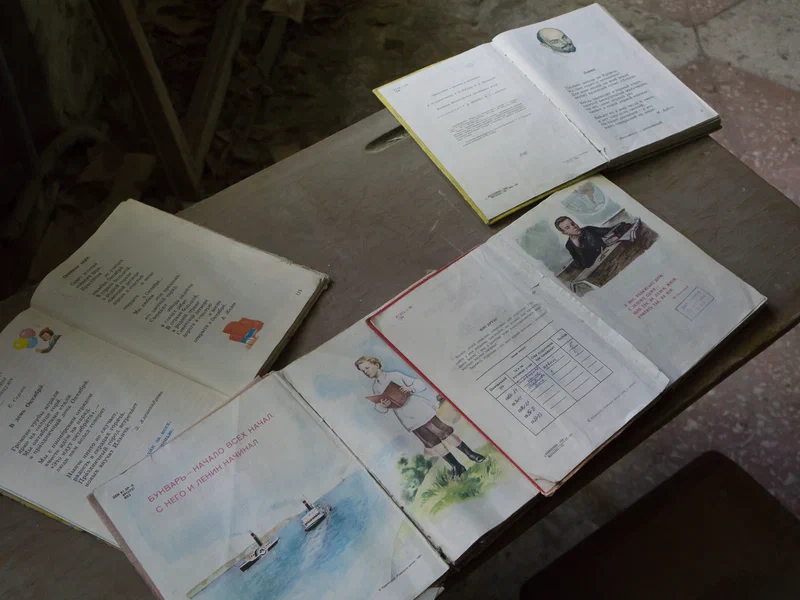
Ленин
In keeping with the time-capsule-ness of the zone, all schoolbooks still begin with either quotes by or stories about Lenin, and how the children should aspire to become like him. While the state religion of the Soviet Union was atheism, they seem to have had trouble getting rid of the veneration of their saints.
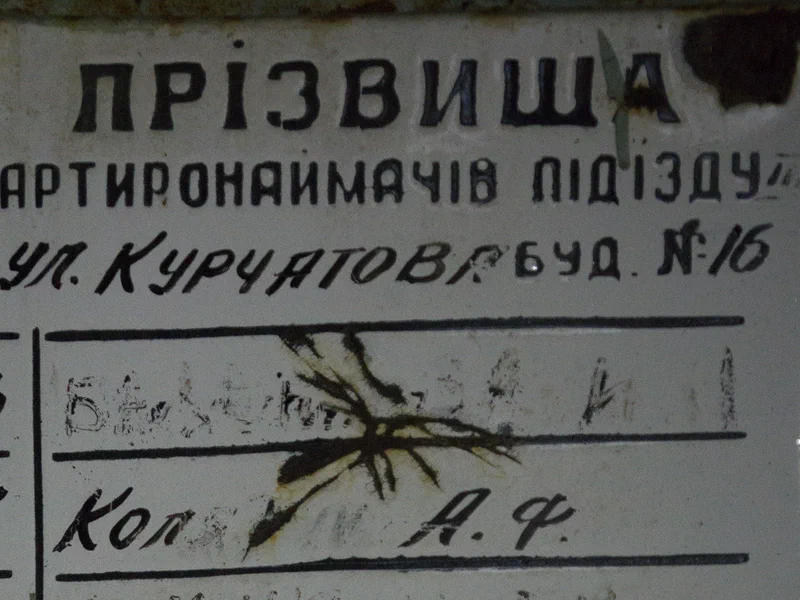
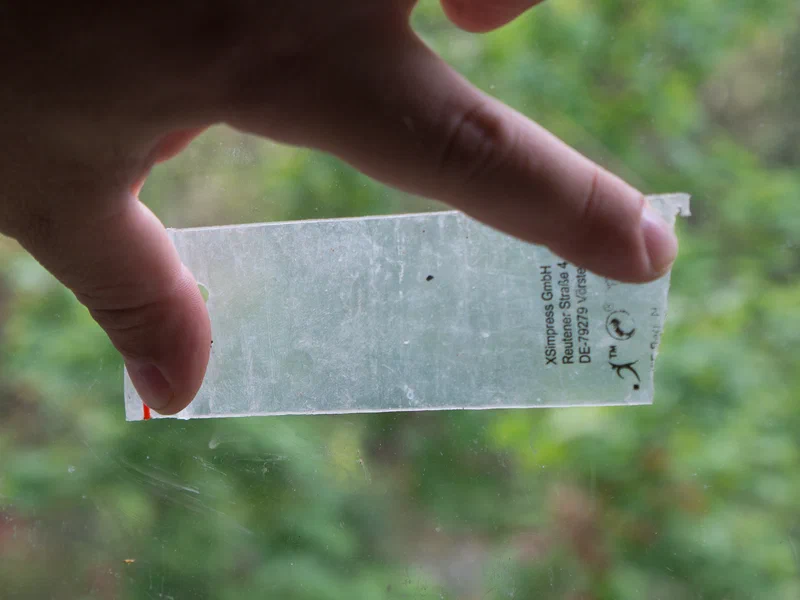
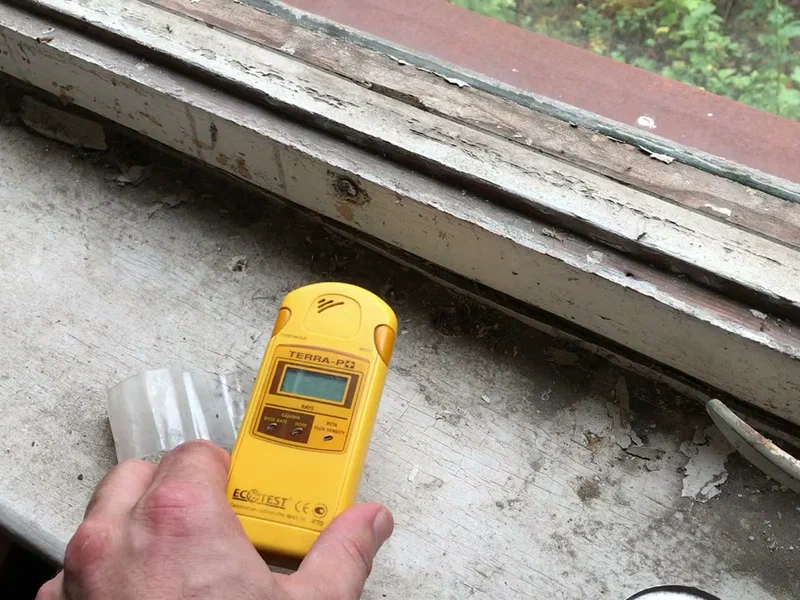
…because when we put our dosimeter on it, it went absolutely berserk. If we hold the detector right on the speck, readings go up to more than 6’600 uSv - 6 mSv! That’s about 66’000 times normal background radiation!
While the radiation drops dramatically as soon as you gain some distance, that left me with an uneasy feeling – it would be only too easy to breathe something like that in, and having that in your system permanently would most definitely wreak havoc. It would also certainly show up on the dosimetric scans when you leave the zone.
Day Two: The Robots
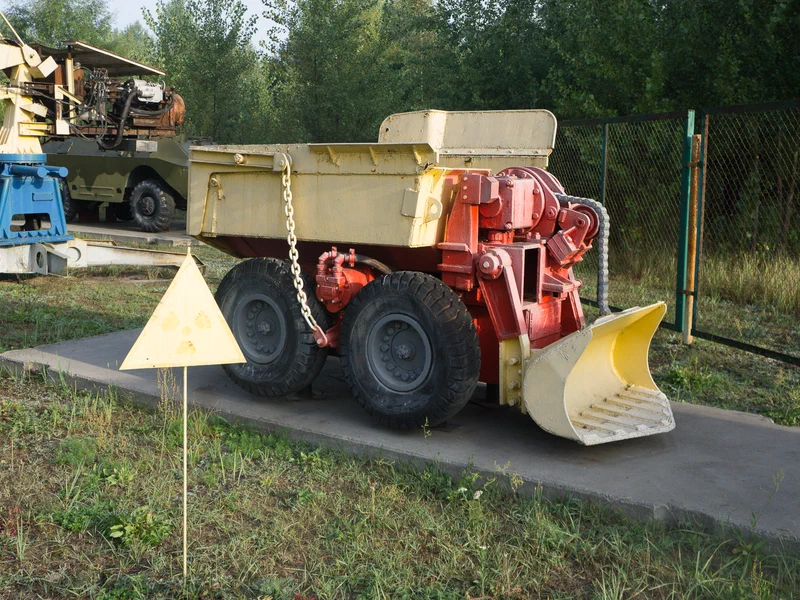
After a comfortable night at the hotel “Десятка” (“The Ten”) in Chernobyl Town – made slightly surreal by the serving of Beer strictly only between 7pm and 9pm and the locked cast iron cage around the entrance to prevent people going walkabout at night – we went to see the small exhibition set up in town that shows the different types of robots used to attempt to clean the roof of reactor number 3. None of them could withstand the radiation for any length of time, so “Biorobots” – humans – were used instead.
The story of those heroes is absolutely incredible: They’d spend up to 45 minutes getting geared up for the task, run out of the building, shovel radioactive graphite over the edge of the roof back into the reactor building, and run back inside after only 90 seconds, because even with protective gear, that was as long as they could work there without picking up a lethal dose of radiation.
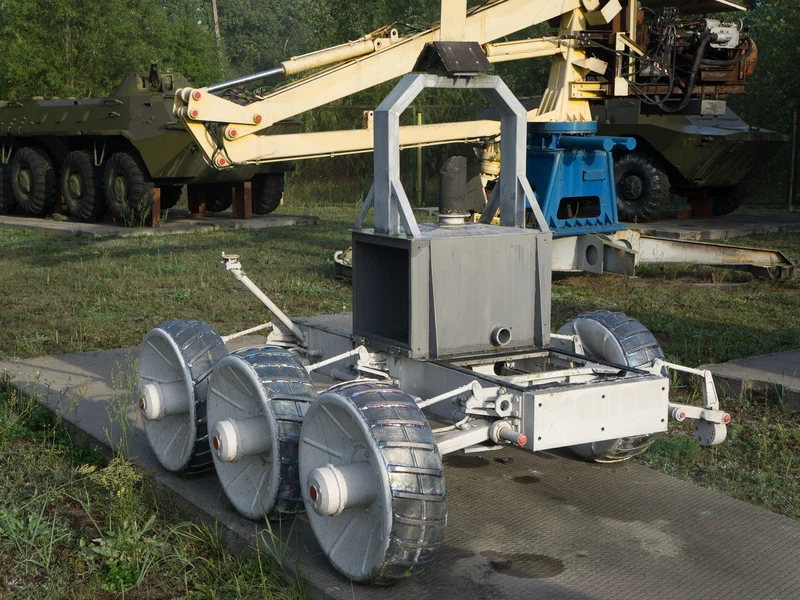
Луноход
Of the several robots there, I found this one most worthy of mention. To the space afficionado, it’s immediately recognizable as a “Lunokhod” – Moonwalker – that was adapted to the purpose of cleaning roofs instead of exploring the moon. As we know, it too failed.
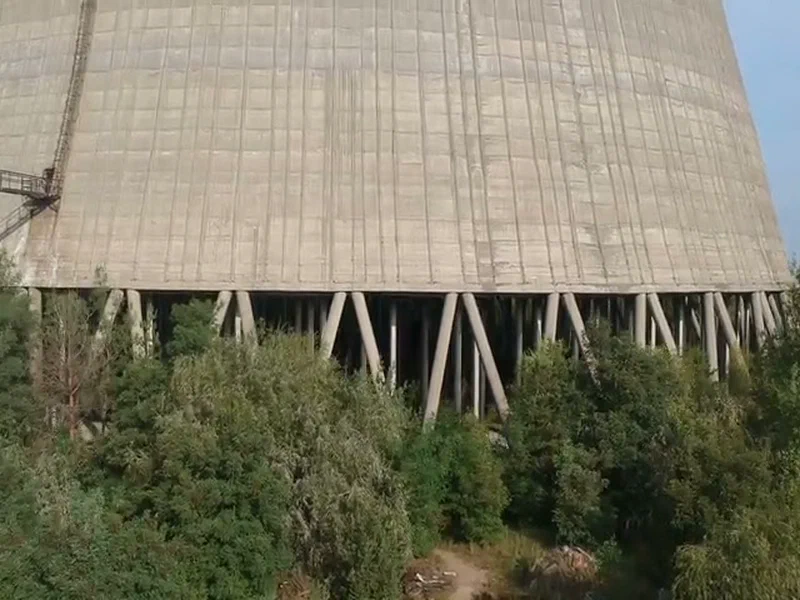
Cooling Tower
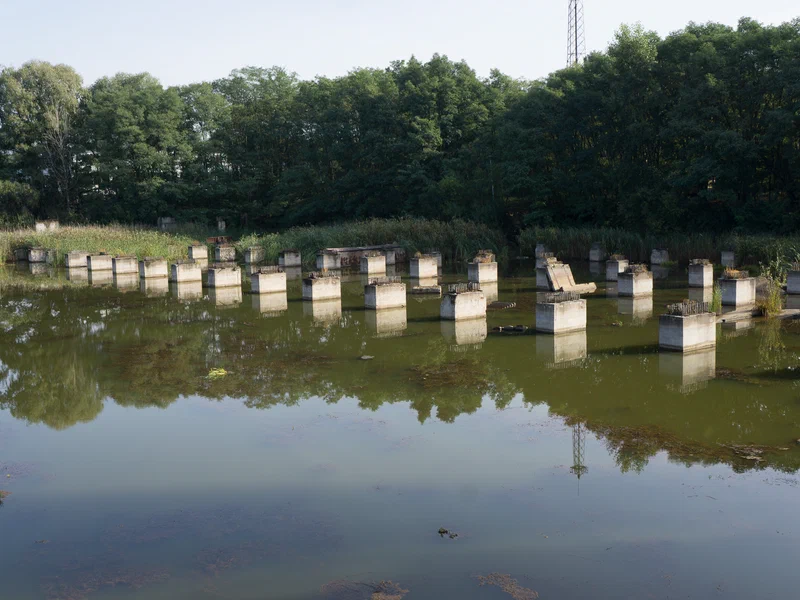
This video shows the height of the cooling tower that was under construction in 1986, and will stay under construction forever. To get an idea of scale, look closely at the struts the tower is standing on before moving to the next picture.
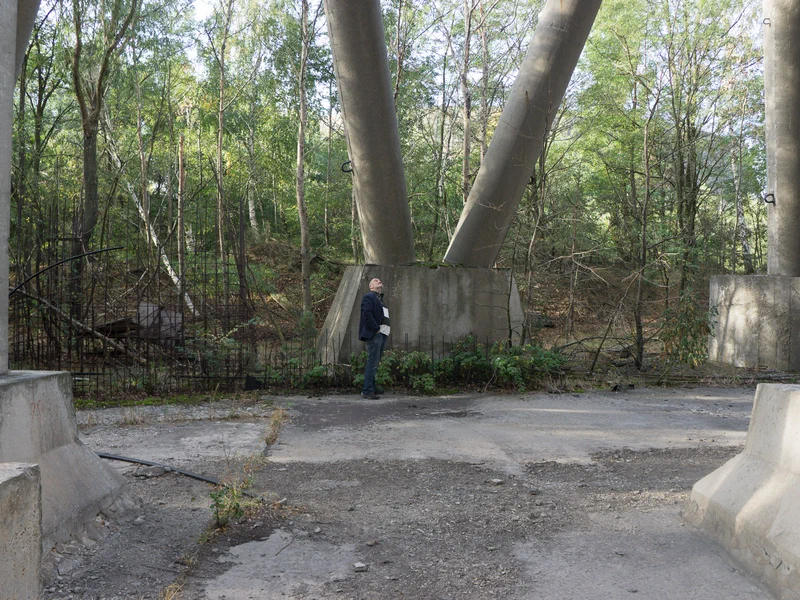
…there’s me, standing next to one of those struts – at slightly over 1.8m, I don’t even reach the top of the base they’re standing on. What you see in this picture is only about 1/4 of the actual strut, so you can try to imagine the sheer scale of that tower. It was, I’d say, literally the biggest enclosed space I’ve ever stood in. Of course, there was a lot of shouting going on – the acoustics of the place are insane!
This is the whole extent of the struts with me for scale:
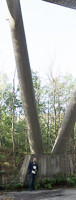
…now go back to the video and look at the struts again.
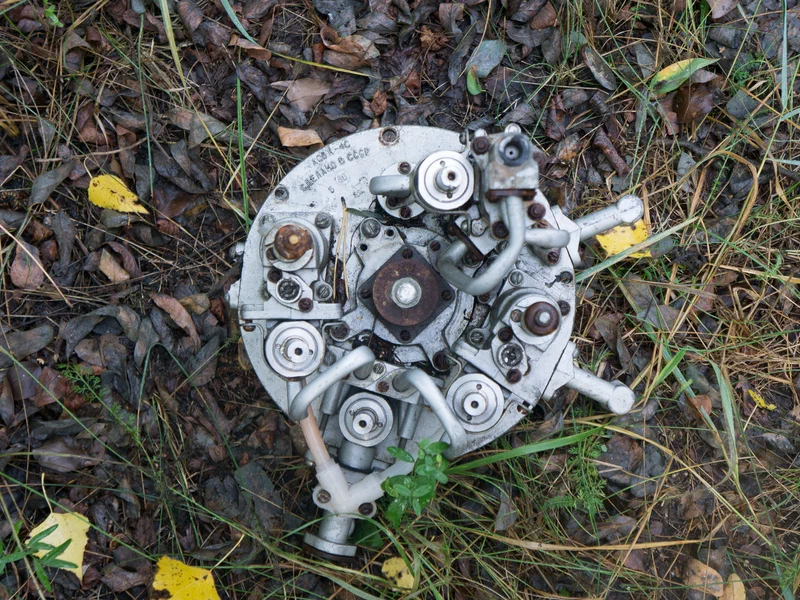
Автосатуратор АСБК-4 (без сиропов)
Everywhere you look, there’s machinery, circuit boards and other bits strewn on the ground, all “made in the USSR”. I found out by the part number of this thing that it’s an “Autosaturator ASBK-4”. I’m sure I don’t need to explain to you what that does. Erm.
(Actually, if somebody does know, drop me a line)
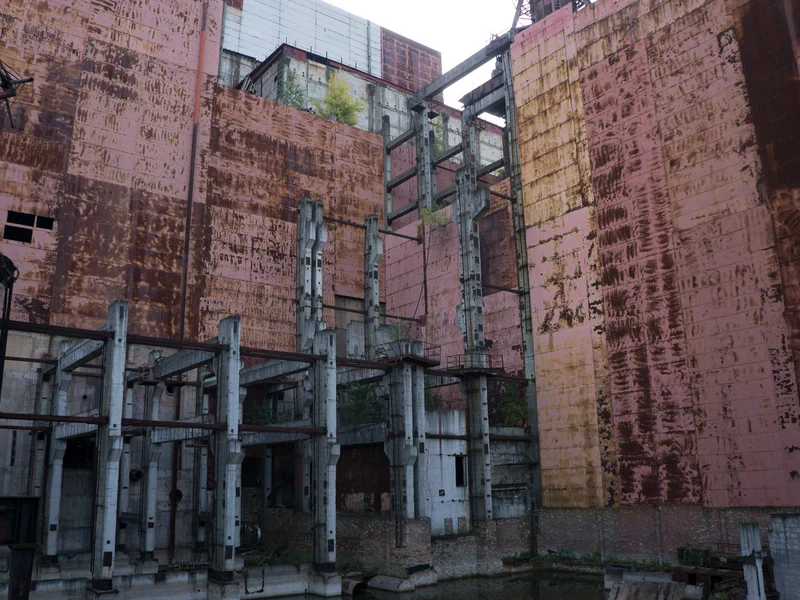
Reactor No 5
This is reactor number five. It was under construction in 1986, and stayed under construction. The red cladding on the outside is not part of the original design, but was quickly rigged up after the accident to prevent too much radioactive dust from entering the building – there were plans to finish building it after the accident had been taken care of. As we now know, this never happened.
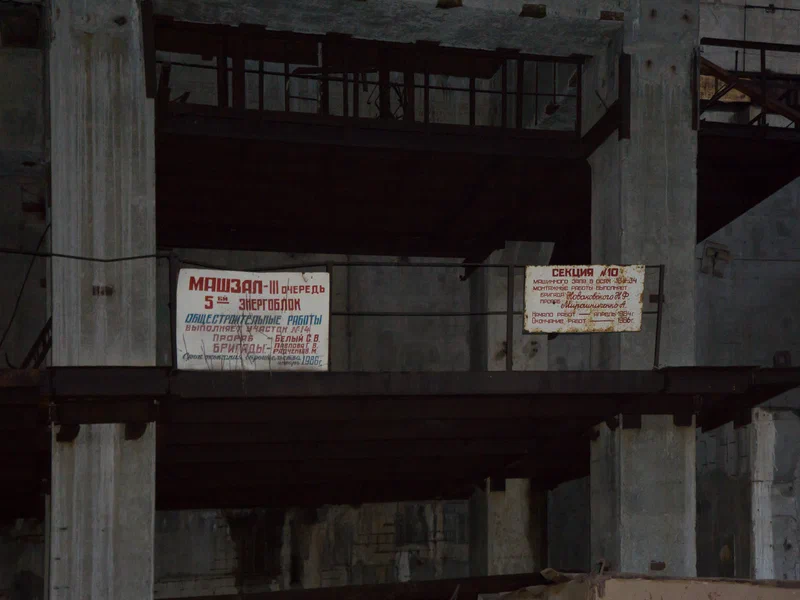
Машзал 3 очередь, 5ый знергоблок
Inside, the old placards “Machine Room, Stage 3, Reactor Block 5” and “Section 10” with the names of people responsible and the beginning and end dates of construction are still hanging on the railings. While we were inside, we heard shouts and sounds of metal being cut with heavy machinery from another part of the building – so we either came across ghosts, looters or planned deconstruction works on the site. We didn’t stick around to find out.
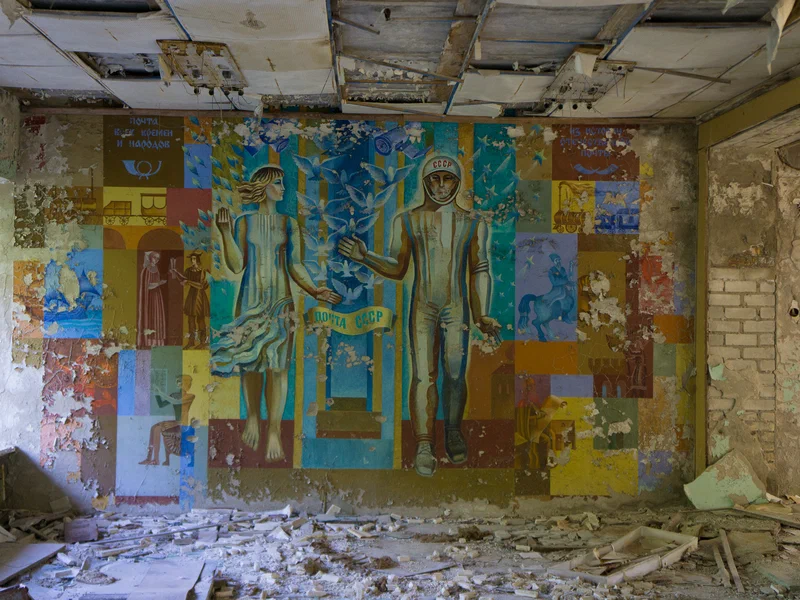
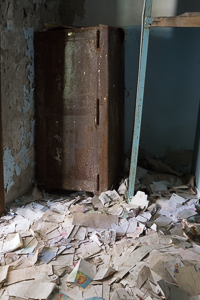
Back in Pripyat, we visited the post office. One of the murals there is still in surprisingly good condition. Inside, we had to wade through inches deep postal forms, “Happy 1st of May”-cards and preprinted envelopes. In one of the back rooms, we found a safe, which was rusty but still locked. I wonder if somebody still has the key and what, if anything, could be found inside…
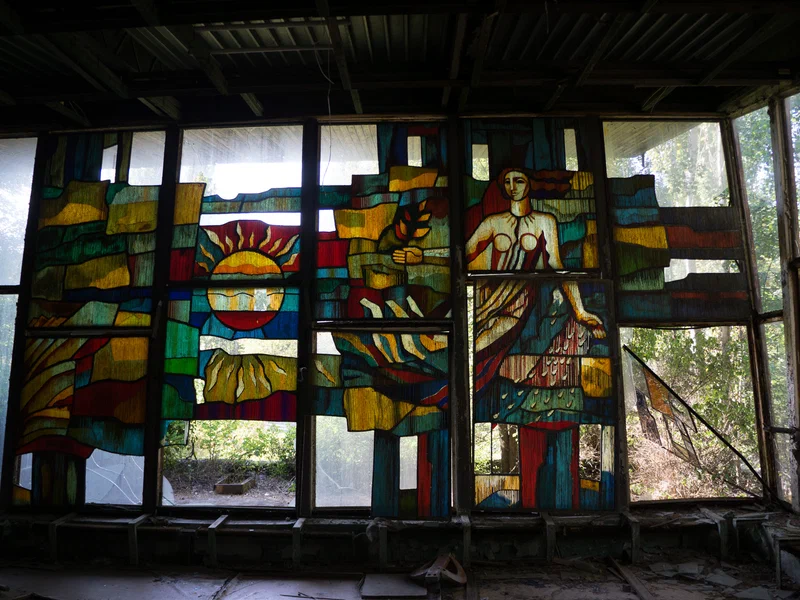
Кафе Припять
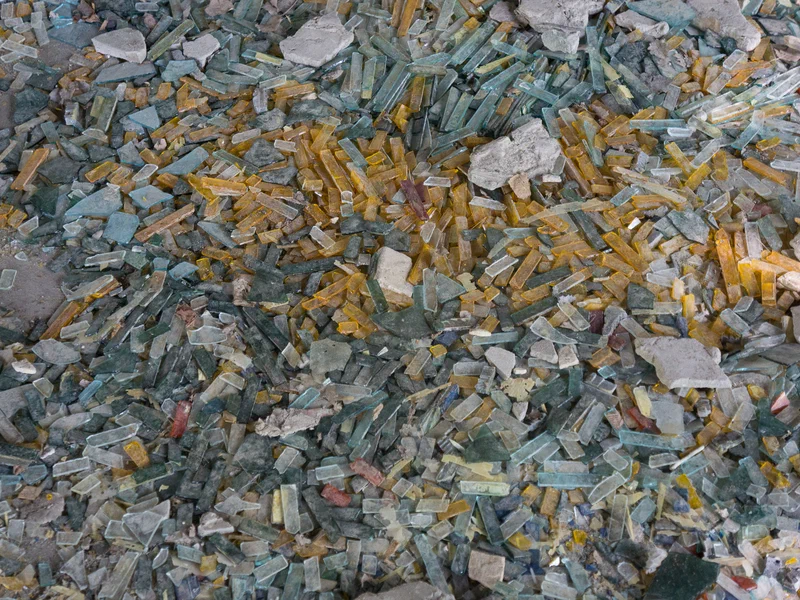
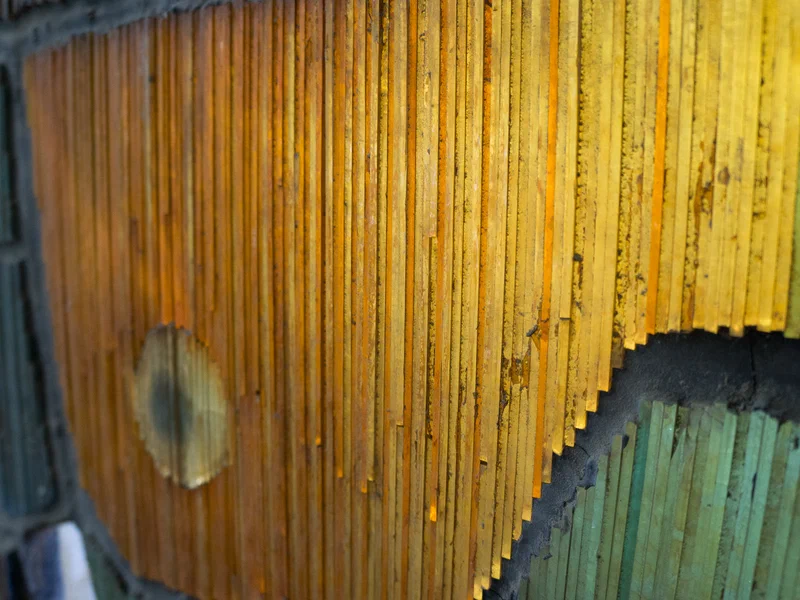
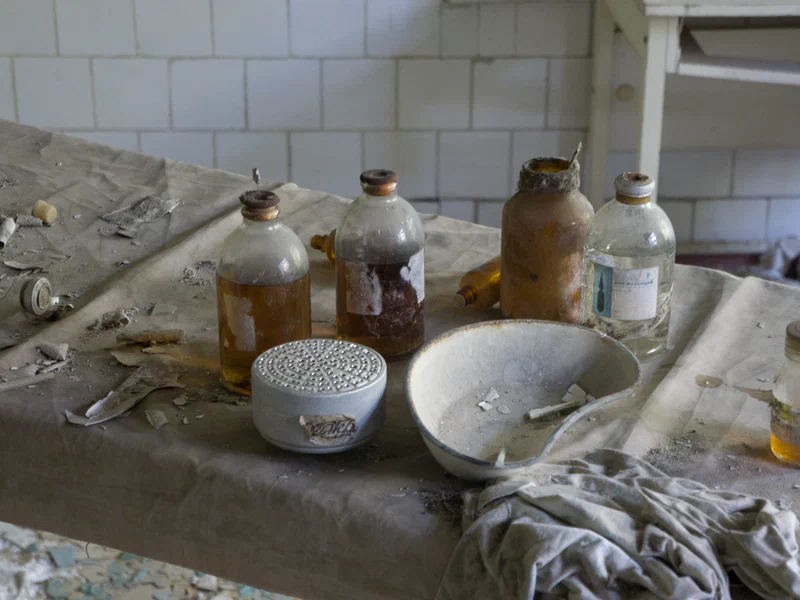
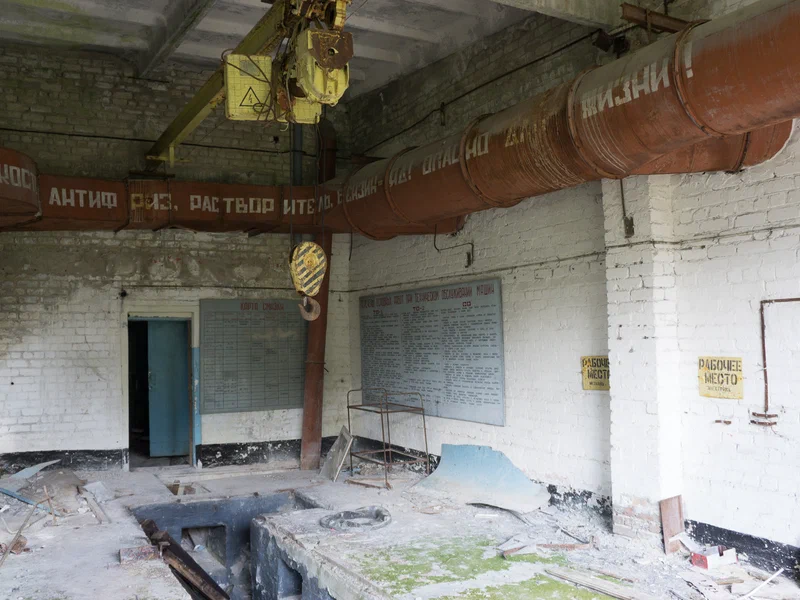
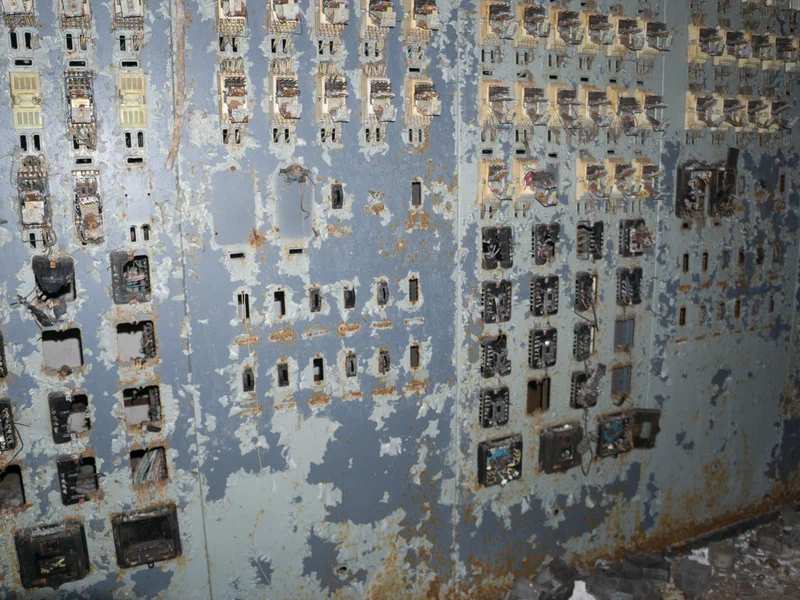
The café “Pripyat” was another stop on our tour. The stained glass windows are still mostly in place…
Пікнік на узбіччі
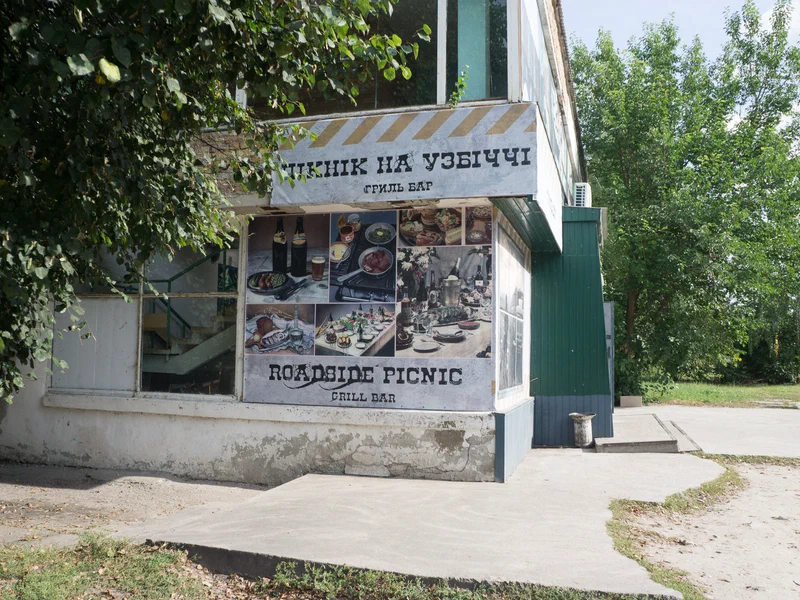
Our last stop on this tour required preparation. We drove back into Chernobyl town and went shopping at the “Roadside Picnic” shop and grill bar. It’s funny how the Strugatsky-Brothers short story has given the name to the shop via a Tarkovsky film and a video game, even if the first two predate the accident and have nothing to do with the latter except the name. Yep – it’s complicated. We didn’t try to read anything into it but went in and bought a good quantity of sausages, cheese and tinned food.
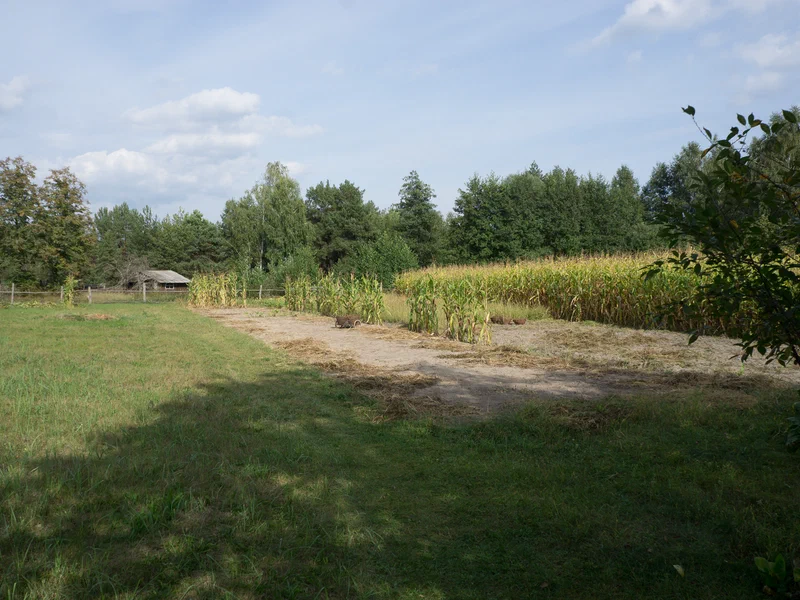
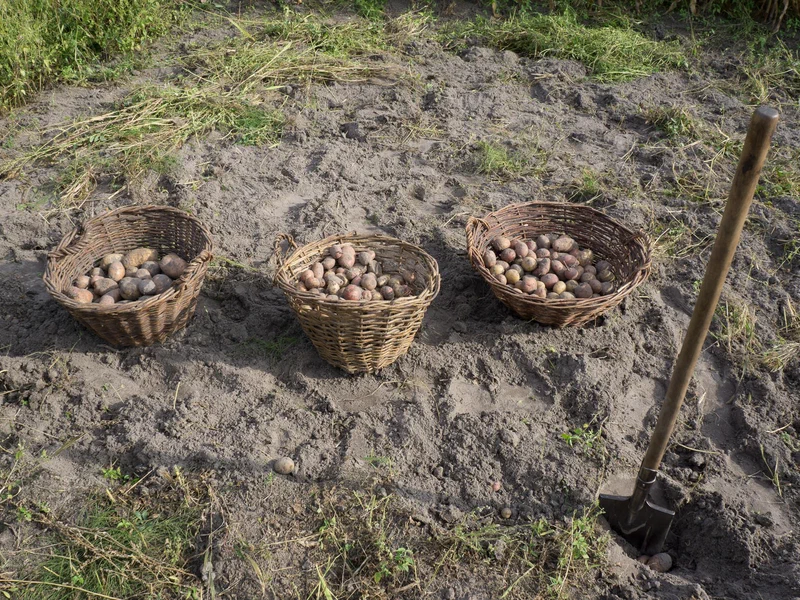

Тунья
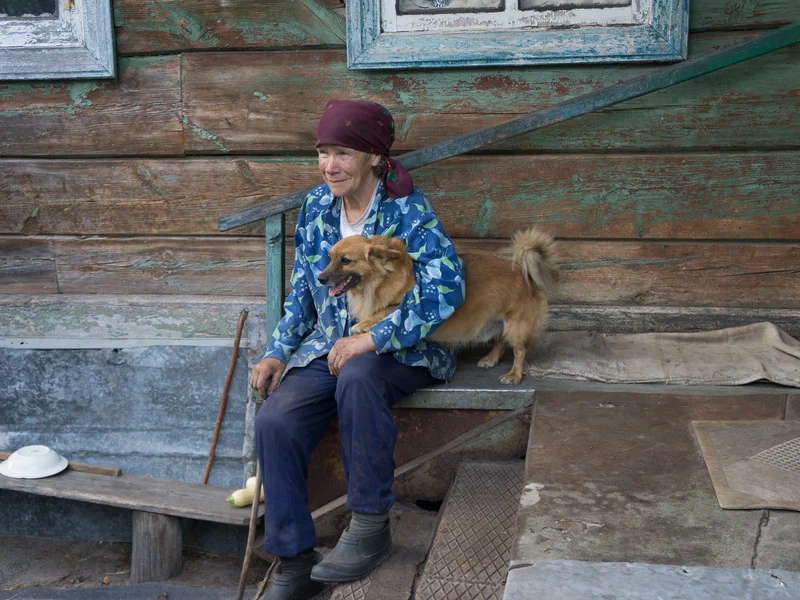
It almost looks like somebody lives there. And somebody does! Meet Evgeniya (called by her short name “Tunya”), who has returned after the evacuation and has made the old village her home again. This isn’t her original house, she was offered it by the original owner who doesn’t expect to come back. We brought her the supplies from “Roadside Picnic”, as the “supermarket van” only visits her village once or twice a month and she has no possibility to contact the outside world – no telephone, no mobile, and her next neighbour (one of three people living in the whole village) is about three kilometers away. Igor regularly visits her with his tour groups, and she was happy to chat to us about her life and remind me how rusty my Russian has become.
I asked her if she was OK with her picture being in my story. She seemed amused by that, but agreed.
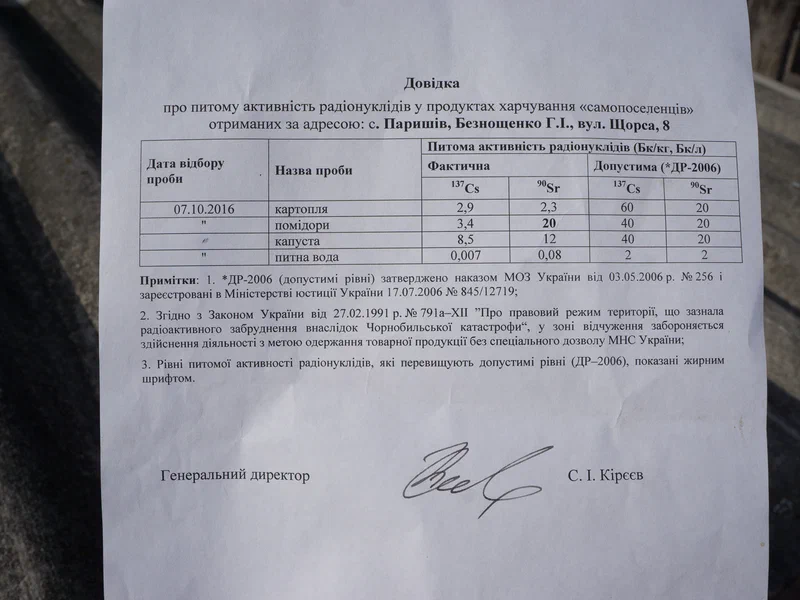
And on that note – it was time to leave the zone again. Even after two days, I looked back in sadness, vowing to return. There are so many more corners to discover…
Thanks go to SoloEast tours, once more providing us with excellent transport and a knowledgeable guide, Igor – as well to my three new Chernobyl buddies, some of whom I had known before. Travelling the Zone together isn’t something one easily forgets…
THE END
…for this time